<?xml version="1.0" encoding="utf-8"?>
<feed xmlns="http://www.w3.org/2005/Atom">
    <title>Cornichon.org</title>
    <link rel="alternate" type="text/html" href="http://www.cornichon.org/" />
    <link rel="self" type="application/atom+xml" href="http://www.cornichon.org/atom.xml" />
    <id>tag:www.cornichon.org,2009-12-21://2</id>
    <updated>2012-05-16T18:08:13Z</updated>
    <subtitle>Tasting notes and culinary dispatches. Crisp, crunchy words, typed fresh daily.</subtitle>
    <generator uri="http://www.sixapart.com/movabletype/">Movable Type 4.32-en</generator>

<entry>
    <title>The Godfather moves on. Ciao, Luciano!</title>
    <link rel="alternate" type="text/html" href="http://www.cornichon.org/2012/05/ciao-luciano.html" />
    <id>tag:www.cornichon.org,2012://2.1463</id>

    <published>2012-05-16T18:00:00Z</published>
    <updated>2012-05-16T18:08:13Z</updated>

    <summary>It was mid-morning on a Tuesday, and Luciano Bardinelli had just lit his first cigar of the day, On Sunday, Mother&apos;s Day, he&apos;d served a...</summary>
    <author>
        <name>Cornichon</name>
        <uri>http://www.cornichon.org</uri>
    </author>
    
        <category term="Culinary Dispatches" scheme="http://www.sixapart.com/ns/types#category" />
    
        <category term="Italian Wine Food Travel" scheme="http://www.sixapart.com/ns/types#category" />
    
    
    <content type="html" xml:lang="en" xml:base="http://www.cornichon.org/">
        <![CDATA[<p><a href="http://www.cornichon.org/Luciano%20logo.jpg"><img alt="Luciano logo.jpg" src="http://www.cornichon.org/assets_c/2012/05/Luciano logo-thumb-300x199-1725.jpg" width="300" height="199" class="mt-image-left" style="float: left; margin: 0 20px 20px 0;" /></a>It was mid-morning on a Tuesday, and Luciano Bardinelli had just lit his first cigar of the day,  On Sunday, Mother's Day, he'd served a full house; on Monday, he'd packed up his files and belongings. After a lifetime as an owner, headwaiter, manager, occasional line cook, waiter, busboy, Luciano was not going to work in one of his own restaurants. "My first day as a free man."</p>

<p>Luciano (no one calls him Signor Bardinelli for long) had come to Seattle exactly 30 years ago, in 1982. There was no Tom Douglas, no Ethan Stowell. There were no websites to chronicle the comings and goings of platoons of energetic young chefs, no Eater.com, no Voracious, no ChowHound. </p>

<p>Born on the shores of Lago Maggiore, in the northern Italian Alps, Luciano had already managed exclusive restaurants and private clubs in Las Vegas and the Hollywood Hills. One fine autumn day in 1981 he happened to pay a call on a friend in Seattle, and found that the landscape of red and yellow leaves reminded him of home. Within months, he had left the desert and driven to Seattle, the radio of his U-Haul tuned to the Kentucky Derby. ("The winner was a long shot named Gato del Sol," he recalls.)</p>

<p>Luciano became the Godfather to Seattle's Italian restaurant renaissance. He was not a chef by training or temperament; his strong suit was Armani (topped these days by a full head of white hair), served with an urbane elegance. French was the cuisine of prestige back then, but Settebello, his first Seattle restaurant, on Capitol Hill was decidedly Italian. Not low-brow, Spaghetti House meatballs-in-red-sauce but classy, suave northern Italian: osso buco, agnolotti stuffed with veal, tiramisu. In the course of its ten-year run, it changed the way Seattle thought about food--not just Italian food, but restaurant food in general. </p>

<p>One of his cooks was Scott Carsberg, who'd fallen in love with Italian food, and went on to start Lampreia and Bisato; he's the exception: a chef who really knows and understands Italian cooking. A mutual friend says, "Luciano has a point when he says that these Americans go to Italy for three months and think they know how to make pasta and cook Italian food. The soba masters in Japan study the art of making noodles for 15 years, and then spend the next 30 perfecting it. You can't just order it frozen from California." In an interview for the Seattle Times five years ago, Carsberg returned the compliment: "Luciano was the best front man in the Italian genre. He brought modern Italian cuisine to Seattle."</p>

<p>Vancouver, BC, had a similarly gregarious Italian promoter named Umberto Menghi, who'd started building a restaurant empire ten years earlier. Word got around, and pretty soon Umberto sent down his associate, Carmine Smeraldo, to open an outpost in Pioneer Square. Umberto withdrew within a couple of years but Carmine remained; he and Luciano became best friends.</p>

<p>"Carmine and I were the same age. We were like brothers," Luciano told me this week. "After he died in January, I thought, it's time to scale down and do something else."</p>

<p>What he'd been doing for three decades, of course, was opening and running restaurants. A string of them after Settebello: Stresa, Sans Souci, Italianissimo, among others. Sometimes he'd become a minority partner and help out a friend; sometimes he'd make bad bets on a location or a concept; sometimes he'd become distracted by marital problems. His last place, Ristorante Luciano, had a great location, Bellevue Square; a landlord, Kemper Freeman, with a reputation for being hard-nosed; and a clientele of Yelpers quick to complain about high prices and a mis-fired dish.</p>

<p>"I owed a lot of money, but Mr. Freeman released me. And he gave me a going-away party. He paid for 60-70 people." In attendance: Eastsiders who'd been coming to the restaurant regularly, along with a few Seattle diners who'd remained loyal. </p>

<p>At Bellevue Square, a new tenant is already lined up: Spice Route Cuisine, a mid-market Indian restaurant, currently at Crossroads. As for Luciano, after taking some time off for a trip back to Italy, he'll resettle in Morro Bay, Calif., where he has his eye on a little house overlooking the Pacific. "Twenty seats, retired people who come in two-three times a week. I'll go to the market for produce and fish and fix a fresh menu every day." He hopes to be open by mid-summer.</p>]]>
        
    </content>
</entry>

<entry>
    <title>Washington AVAs: Yakima Valley</title>
    <link rel="alternate" type="text/html" href="http://www.cornichon.org/2012/05/washington-avas-3.html" />
    <id>tag:www.cornichon.org,2012://2.1405</id>

    <published>2012-05-15T00:30:00Z</published>
    <updated>2012-05-15T00:31:12Z</updated>

    <summary> Even before modern agriculture, the Yakima Valley was a bountiful land. In one of the many Native American dialects of central Washington, the word...</summary>
    <author>
        <name>Cornichon</name>
        <uri>http://www.cornichon.org</uri>
    </author>
    
        <category term="Travel" scheme="http://www.sixapart.com/ns/types#category" />
    
        <category term="Wine" scheme="http://www.sixapart.com/ns/types#category" />
    
    <category term="avas" label="AVAs" scheme="http://www.sixapart.com/ns/types#tag" />
    <category term="yakimavalley" label="Yakima Valley" scheme="http://www.sixapart.com/ns/types#tag" />
    
    <content type="html" xml:lang="en" xml:base="http://www.cornichon.org/">
        <![CDATA[<p><a href="http://www.cornichon.org/Rattlesnake%20Hills%20vineyard.JPG"><img alt="Rattlesnake Hills vineyard.JPG" src="http://www.cornichon.org/assets_c/2012/05/Rattlesnake Hills vineyard-thumb-560x336-1723.jpg" width="560" height="336" class="mt-image-none" style="" /></a></p>

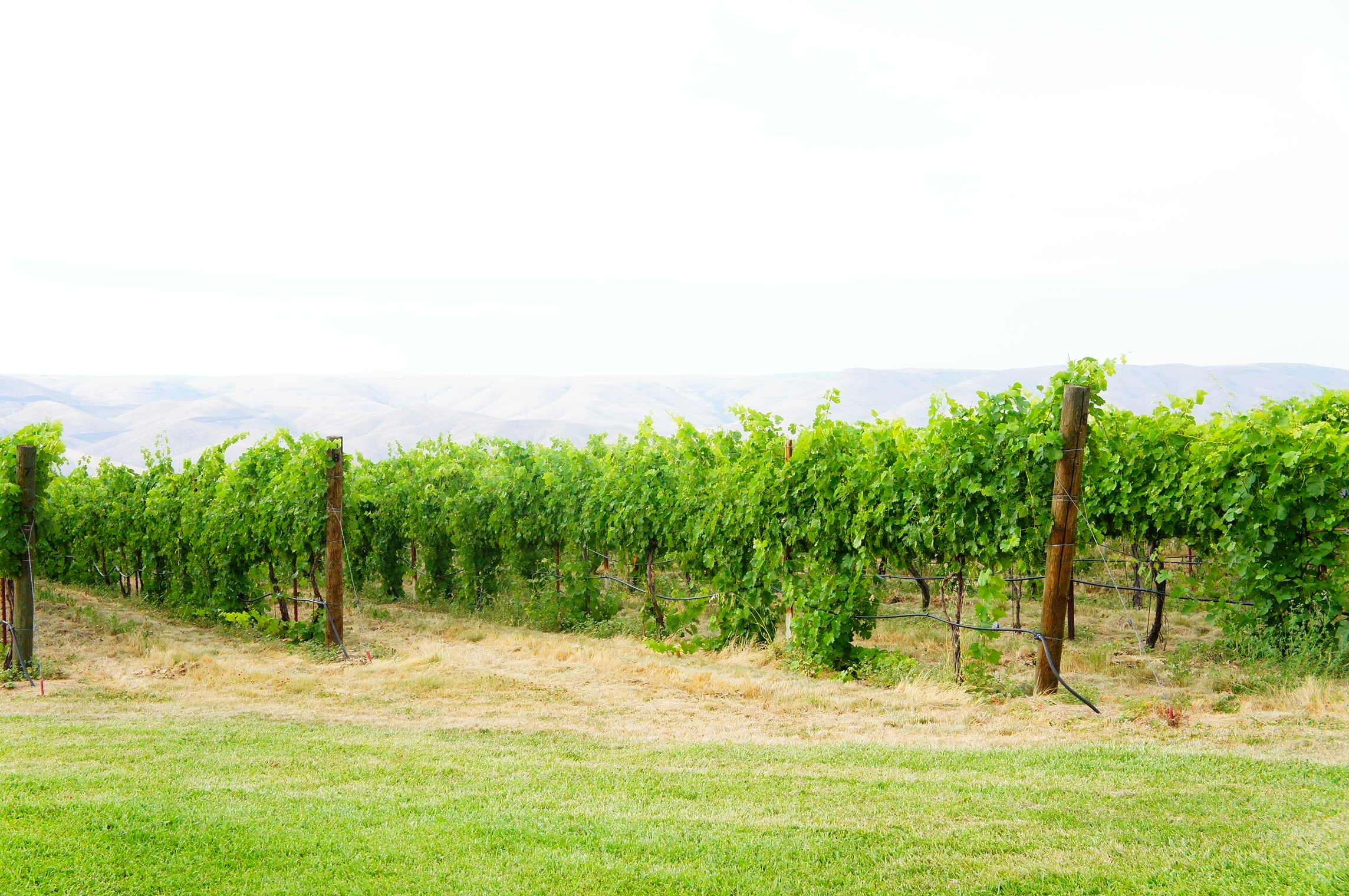
<p>Even before modern agriculture, the Yakima Valley was a bountiful land. In one of the many Native American dialects of central Washington, the word E-ya-ki-ma means "well-fed people."</p>

<p>Apple orchards and hop vines came soon after the rivers and mountain runoffs were channeled for irrigation. The first grapes were the hardy, prolific Concords, whose sweet, fleshy fruit was prized by the Welch's cooperative to make juice and jelly. But Concords sell for $200 a ton, while vinifera like Cabernet and Merlot sell for ten times as much. In 1983, with a couple thousand vineyard acres planted and Washington's wine industry well underway, the Yakima Valley became the state's first AVA. It's easy to see the geography: the valley is bordered on the north by Ahtanum Ridge and the Rattlesnake Hills, to the south by Toppenish Ridge and the Horse Heaven Hills; Red Mountain rises at the eastern end, Mount Adams presides in the western distance.</p>

<p>The valley is defined geologically by a broad layer of fractured basalt topped with silt, loam, loess and cobble. The climate is desert-like during the growing season (only six to eight inches of rainfall, but access to the Valley's vaunted Roza and Kennewick irrigation districts for water), the familiar late-season drop in nighttime temperatures (to maintain a good balance of acidity in the grapes), and cold winters (to kill pests).</p>

<p>Thomas Henick-Kling, who runs the WSU viticulture and enology program sees quite a variety of wines coming from the valley. with more full-bodied reds coming from vineyards on the eastern end (Red Mountain) and more elegant, finely textured reds from the cooler<br />
sites on the northern and southern slopes.</p>

<p>Even so, Yakima Valley hasn't always produced the state's best wines. Paul Gregutt, author of "Washington Wines & Wineries," remarked in 2007 that the AVA wasn't living up to its potential, but by 2010 he was applauding the influx of new talent and recognizing the best of the old-line growers. (The valley's two leading growers, Mike Sauer in Wapato and Dick Boushey in Grandview, don't have wineries of their own.) "It is heartening to see growers and winemakers working together to promote their many strengths," Gregutt wrote in his 2010 edition.</p>

<p>Fully a third of Washington's wine grapes are in the Yakima Valley AVA, and there's room for vineyard expansion. The AVA encompasses 12,000 acres currently planted (including its three sub-appellations, Red Mountain, Rattlesnake Hills and Snipes Mountain) with a total of 82 wineries. The challenge, says Boushey, is finding land that includes water rights.</p>

<p><em>Appeared originally in EdibleSeatte</em></p>]]>
        
    </content>
</entry>

<entry>
    <title>Madama Butterfly&apos;s tragic tale of trust and betrayal</title>
    <link rel="alternate" type="text/html" href="http://www.cornichon.org/2012/05/madama-butterfly.html" />
    <id>tag:www.cornichon.org,2012://2.1461</id>

    <published>2012-05-11T14:30:00Z</published>
    <updated>2012-05-11T14:38:43Z</updated>

    <summary>The story is straightforward, as grand opera plots go: a naval officer deceives a poor young girl and pretend-marries her, gets her pregnant and leaves...</summary>
    <author>
        <name>Cornichon</name>
        <uri>http://www.cornichon.org</uri>
    </author>
    
        <category term="Arts &amp; Entertainment" scheme="http://www.sixapart.com/ns/types#category" />
    
    <category term="madamabutterfly" label="madama butterfly" scheme="http://www.sixapart.com/ns/types#tag" />
    <category term="opera" label="opera" scheme="http://www.sixapart.com/ns/types#tag" />
    <category term="patriciaracette" label="Patricia Racette" scheme="http://www.sixapart.com/ns/types#tag" />
    <category term="seattleopera" label="seattle opera" scheme="http://www.sixapart.com/ns/types#tag" />
    
    <content type="html" xml:lang="en" xml:base="http://www.cornichon.org/">
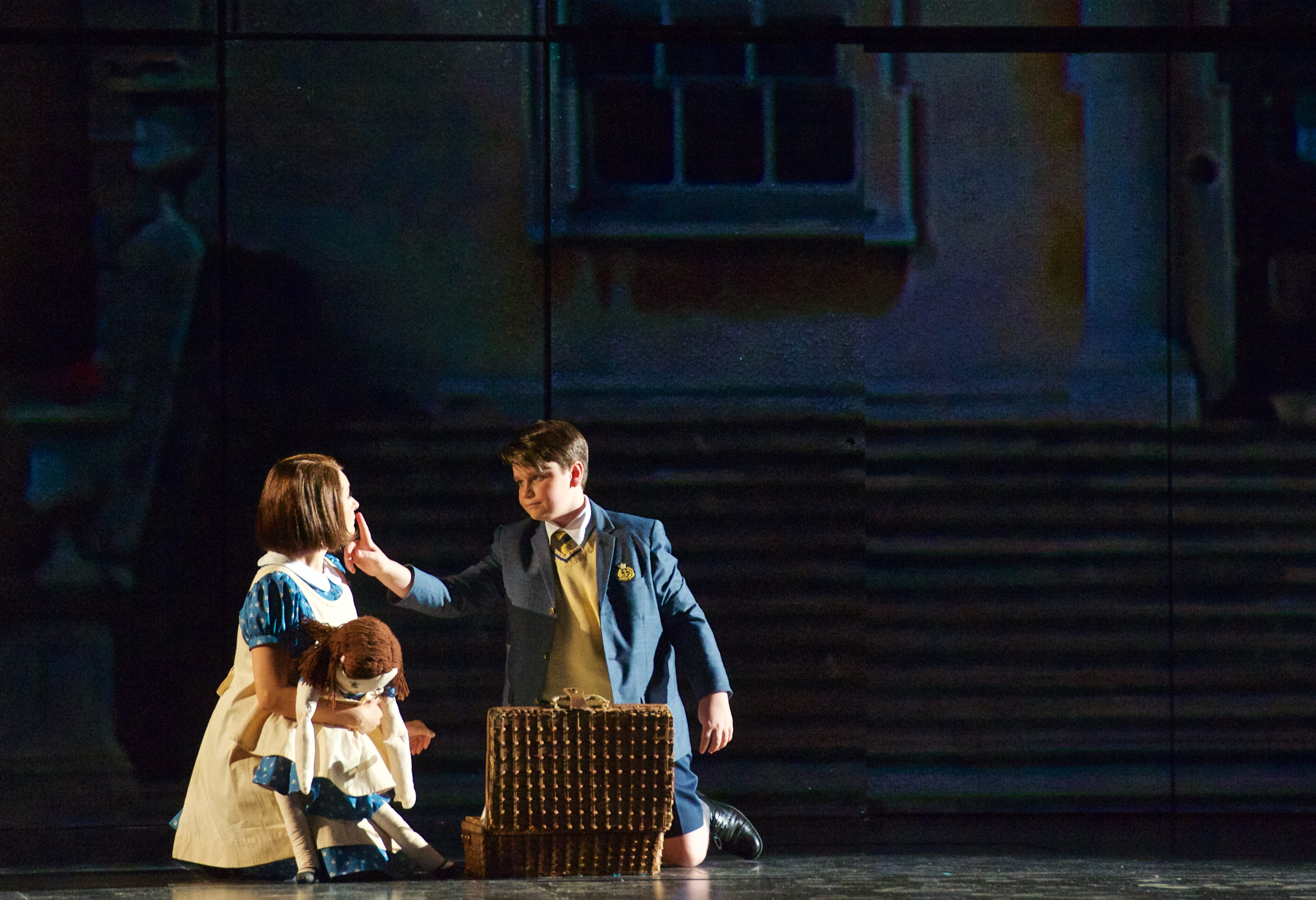
        <![CDATA[<p><a href="http://www.cornichon.org/Madama%20Butterfly.jpg"><img alt="Madama Butterfly.jpg" src="http://www.cornichon.org/assets_c/2012/05/Madama Butterfly-thumb-350x396-1716.jpg" width="350" height="396" class="mt-image-left" style="float: left; margin: 0 20px 20px 0;" /></a>The story is straightforward, as grand opera plots go: a naval officer deceives a poor young girl and pretend-marries her, gets her pregnant and leaves town. When she learns, three years later, that he has for-real married someone else, she turns the child over to his new wife and kills herself.</p>

<p>In <em>Madama Butterfly</em>, currently playing at <a href="http://www.seattleopera.org">Seattle Opera</a>, this age-old tale of wayward love, of trust and betrayal, is set in Japan (a new and exotic land to early 20th century Europeans), but Puccini's music and the Giacosa-Illica libretto were written for Italian ears: over two hours of nonstop, romantic arias, duets and interludes swirling inexorably toward the Butterfly's inevitable, tragic ending.</p>

<p>The term "cad" may be old-fashioned, but Butterfly's lover, Lieutenant Benjamin Franklin Pinkerton, is nothing less. Though he woos her well, in a magnificent love duet that ends Act One, he never considers her more than a plaything. Much is made of his "America Forever" sense of entitlement to "pluck the flowers on every shore" he visits. The US Consul, Sharpless, warns him about not to break Butterfly's "trusting heart," but Pinkerton has convinced himself that in Japan, "everything is flexible," even a marriage contract.</p>

<p>Poor Butterfly. When she enters with her bridal party, luminous beneath a golden parasol, she is "the happiest girl in Japan." She gives herself completely to Pinkerton, even though she's promptly renounced by her family. At the beginning of Act Two, abandoned for three years, she still waits for Pinkerton's ship to return. And here, at <em>Madama Butterfly's</em> midpoint, comes "Un Bel Di," the opera's most famous aria, the heroine's gut-wrenching resolve to tough it out, come what may. Alas, as we know all to well, It's all downhill from there.</p>

<p>When Pinkerton does return, he can't even face Butterfly. Too late, he realizes what a shit he's been. Too late, Butterfly acknowledges she's been deceived. "I knew it would end like this," clucks the Consul. (Last year, an American professor wrote a book, "Butterfly's Child"--renamed Benji-- that imagines the youngster growing up \on a farm in the Midwest after Pinkerton retires.) Stefano Secco, the tenor from Milan who sings Pinkerton in this production, says he knows he's done a good job when he gets booed at the curtain call.</p>

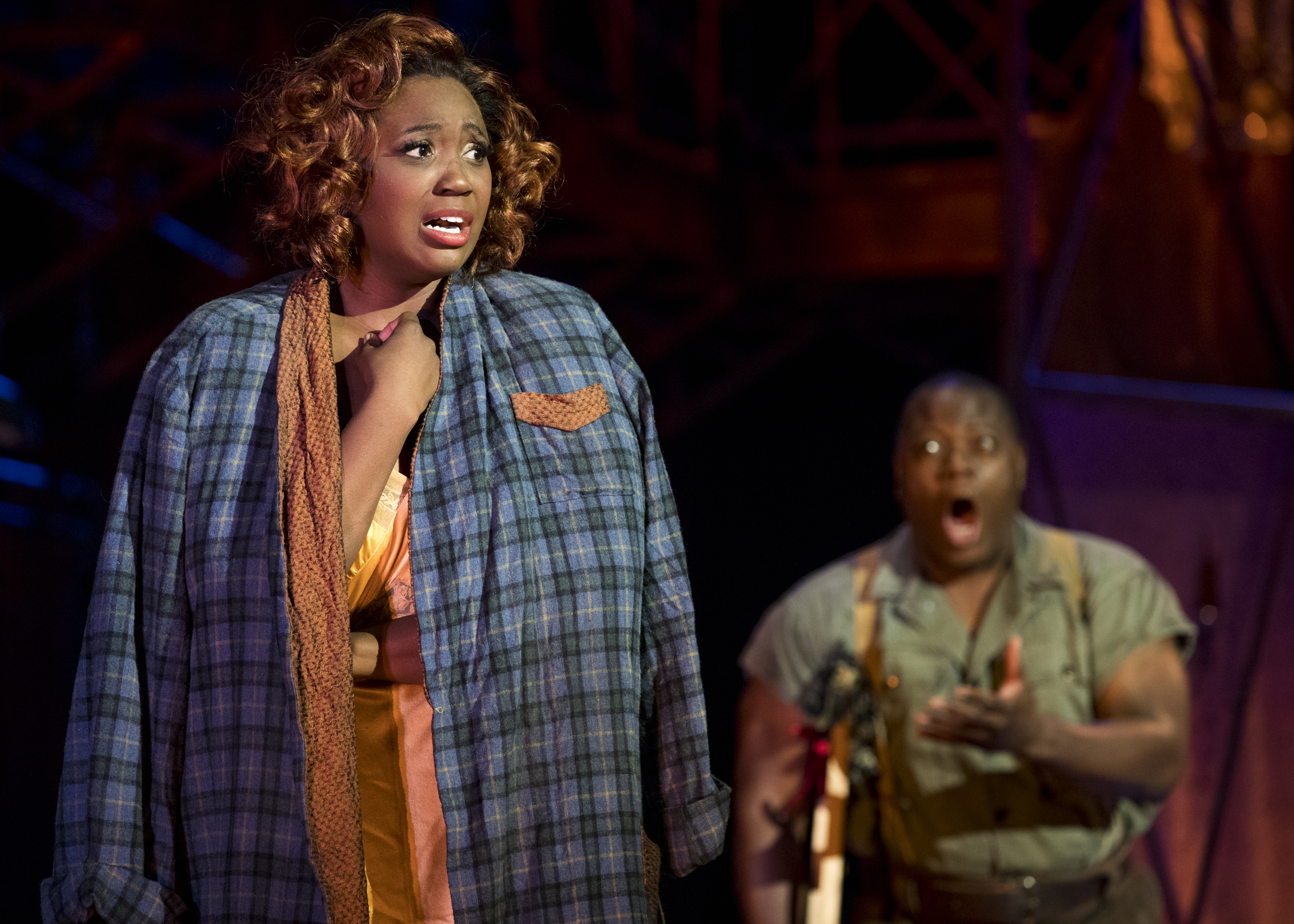
<p>But in the end, it's all about the soprano who sings Butterfly. Patricia Racette owns the role, taking us from a giddy teenager thrilled to be marrying an American in a Navy uniform to the sadder but wiser single mom who chooses suicide over dishonor. Racette has lived in Japan and knows firsthand the gestures and movements of a geisha; she has sung Butterfly almost 100 times, most recently at the Met in New York. Vocally, the part demands everything, while physically the Japanese geisha gestures must be precise. If there's an emotion to be manipulated, Racette knows how to wring the heartstrings.</p>

<p>The story, in fact, was originally adapted for the Broadway stage by the American playwright David Belasco; Puccini saw a production in London in 1900 and--though he understood not one word of English--was moved to tears. And, sure, there's a certain irony that in Seattle the American naval officer is sung by an Italian, the American consul by a Canadian, the two Japanese women by Americans, all led by a Bulgarian conductor. If you stood around until the world produced a perfect Japanese Butterfly, you'd still be waiting for the downbeat.</p>

<p>On the HD simulcast at Key Arena on opening night, it was a bit of a surprise to see beer vendors in the aisles before the music started, although there was no intrusive "Getcher programs, getcher peanuts, getcher sooshee!" thank goodness.Instead, the jaw-dropping immediacy of the performace itself. I found that the closeups of the singers made the story seem even more tragic, but my own sense of awe and terror wasn't readily shared. (That essay is <a href="http://crosscut.com/2012/05/08/arts/108432/madame-butterfly-hd-key-arena-opera/" target="_blank">here</a>.) Onstage at McCaw, there seemed to be much greater warmth in the audience toward the performers, a greater connection with the artists, and a growing sense of excitement and foreboding that exploded in well-deserved applause at the final curtain.</p>

<p><em>Seattle Opera presents Madama Butterfly, at McCaw Hall. Performances May 11, 12, 16 & 19 at 7:30 PM; May 13 & 20 at 2 PM. Tickets from ($25 to $244) online at www.SeattleOpera.org, or by calling the box office (206-389-7676) during business hours.</p>

<p>Above: Patricia Racette as Butterfly, Sefano Secco as Pinkerton. Seattle Opera photo &copy; Elise Bakketun</em></p>]]>
        
    </content>
</entry>

<entry>
    <title>Opera in HD: Ready for her closeup?</title>
    <link rel="alternate" type="text/html" href="http://www.cornichon.org/2012/05/opera-in-hd-ready.html" />
    <id>tag:www.cornichon.org,2012://2.1460</id>

    <published>2012-05-08T17:00:00Z</published>
    <updated>2012-05-08T18:33:58Z</updated>

    <summary> It&apos;s not the fervid excitement that used to precede a Sonics game at Key Arena, with vendors in the aisles: &quot;Getcher programs, getcher co&apos;...</summary>
    <author>
        <name>Cornichon</name>
        <uri>http://www.cornichon.org</uri>
    </author>
    
        <category term="Arts &amp; Entertainment" scheme="http://www.sixapart.com/ns/types#category" />
    
    <category term="keyarena" label="Key Arena" scheme="http://www.sixapart.com/ns/types#tag" />
    <category term="patriciaracette" label="Patricia Racette" scheme="http://www.sixapart.com/ns/types#tag" />
    <category term="puccini" label="Puccini" scheme="http://www.sixapart.com/ns/types#tag" />
    <category term="seattleopera" label="Seattle Opera" scheme="http://www.sixapart.com/ns/types#tag" />
    <category term="simulcast" label="simulcast" scheme="http://www.sixapart.com/ns/types#tag" />
    
    <content type="html" xml:lang="en" xml:base="http://www.cornichon.org/">
        <![CDATA[<p><a href="http://www.cornichon.org/Racette%20as%20Cio-Cio%20San.JPG"><img alt="Racette as Cio-Cio San.JPG" src="http://www.cornichon.org/assets_c/2012/05/Racette as Cio-Cio San-thumb-560x372-1714.jpg" width="560" height="372" class="mt-image-none" style="" /></a></p>

<p>It's not the fervid excitement that used to precede a Sonics game at Key Arena, with vendors in the aisles: "Getcher programs, getcher co' beer, getcher sooshee!" (Not really, but you get the idea). Instead, there's a tranquil anticipation leading up to the first-ever simulcast of a local opera production. </p>

<p>No matter that it's actually happening, live, at McCaw Hall, barely 300 yards away, the premiere of <a href="http://www.seattleopera.org">Seattle Opera's</a> <em>Madama Butterfly</em>. The HD screen at one end of the Key is enormous, 50 by 80 feet, dwarfing the evening's live presenters.  Previews play: interviews with designers and directors. And, just like the movies, there's a cartoon, the iconic "What's Opera, Doc?" parody of classical Wagner stagings. Then Speight Jenkins steps to the microphone at McCaw and onto the screen, ten times larger than life, to say a few words of welcome. </p>

<p>"Lights!!" someone shouts from the balcony, where spotlights are still glaring. As conductor Julian Kovatchev mounts the podium (in a view from the orchestra pit that non-musicians will never see), the shouting becomes a chant, "Turn down the lights! Turn down the lights!" Just in time, the house lights dim, and the maestro gives the downbeat. </p>

<p>Movie directors have known for decades that closeups do wonders for drawing people into a story. ("We didn't need dialogue; we had faces.") and Madama Butterfly's Patricia Racette spends the next three hours reconfirming her status as the queen of opera in HD opera:  She doesn't need to say it: she is big. It's the pictures that got small.</p>

<p>With remarkably few glitches (a split-screen effect in Act III that failed due to a wayward camera), the simulcast was better than the best seat I've ever had at McCaw. No opera glasses needed.</p>

<p><a href="http://www.cornichon.org/Director%20in%20control%20room.jpg"><img alt="Director in control room.jpg" src="http://www.cornichon.org/assets_c/2012/05/Director in control room-thumb-260x195-1712.jpg" width="260" height="195" class="mt-image-left" style="float: left; margin: 0 20px 20px 0;" /></a>Video director Frank Zamcona (known for the San Francisco Opera's successful "Opera at the Ballpark" series) uses his seven HD cameras to propel the story in ways that you can't see no matter where you sit, where you view the full stage no matter what. In Act I, for example, the camera catches Suzuki overhearing Pinkerton tell Sharpless that he's looking forward to the day he'll marry a "real American wife." No way that a Japanese servant girl like Suzuki could actually understand a word of English, but the cutaway (and Suzuki's arched eyebrow) tells the audience that she's already wary of Pinkerton. </p>

<p>The music continues without interruption. There are no recitatives, no spoken dialogue; everything is sung with dramatic immediacy. We see every twitch in Butterfly's composure. Patricia Racette isn't playing a part or singing a role, she's inhabiting her character with such conviction that we forget we're watching a performance. Even though the story is familiar, the outcome known to every opera-goer, we live Butterfly's anguish, and at the climax, when Butterfly surrenders her child and kills herself, thousands of sports fan gasped in horror.  </p>

<p>At McCaw, as Racette took her bows, the audience was on its feet (you could hear them cheering wildly), yet the Key was muted, the crowd strangely silent. Applause, yes, but polite. Almost no one standing. Not because they weren't thrilled, in my view, but because they were numb. It's thrilling to see and hear opera live, and we've been conditioned to respond with applause and calls of bravo at live performances. The hybrid HD experience overwhelms our senses and seems to call for a new set of responses. When we were kids at the matinee, we'd cheer for the cavalry. HD is a different sort of  adventure but we should allow ourselves to become kids again and cheer like crazy.</p>

<p><em>Frank Zamora photo by Jonathan Dean, Seattle Opera</em></p>

<p>(UPDATE of sorts: this isn't just a Seattle issue; according to the <em>NY Times</em>, it's an <a href="http://nyti.ms/KLeLeR">HD problem</a>. </p>]]>
        
    </content>
</entry>

<entry>
    <title>Glamor on the Mediterranean</title>
    <link rel="alternate" type="text/html" href="http://www.cornichon.org/2012/05/glamor-on-the-mediterranean.html" />
    <id>tag:www.cornichon.org,2012://2.1459</id>

    <published>2012-05-05T20:00:00Z</published>
    <updated>2012-05-06T00:01:56Z</updated>

    <summary>Ya gotta hand it to the Italians: no sooner do they crash a fancy boat but they get their folks to buy another one. You...</summary>
    <author>
        <name>Cornichon</name>
        <uri>http://www.cornichon.org</uri>
    </author>
    
        <category term="Italian Wine Food Travel" scheme="http://www.sixapart.com/ns/types#category" />
    
    <category term="costaconcordiadisaster" label="Costa Concordia disaster" scheme="http://www.sixapart.com/ns/types#tag" />
    <category term="italianmanufacturing" label="italian manufacturing" scheme="http://www.sixapart.com/ns/types#tag" />
    <category term="shipbuilding" label="ship building" scheme="http://www.sixapart.com/ns/types#tag" />
    <category term="venice" label="venice" scheme="http://www.sixapart.com/ns/types#tag" />
    
    <content type="html" xml:lang="en" xml:base="http://www.cornichon.org/">
        <![CDATA[<p><a href="http://www.cornichon.org/Costa%20Corcordia%20for%20May.jpg"><img alt="Costa Corcordia for May.jpg" src="http://www.cornichon.org/assets_c/2012/05/Costa Corcordia for May-thumb-250x139-1710.jpg" width="250" height="139" class="mt-image-right" style="float: right; margin: 0 0 20px 20px;" /></a>Ya gotta hand it to the Italians: no sooner do they crash a fancy boat but they get their folks to buy another one. You remember the <a href="http://www.cornichon.org/2012/01/the-sinking-of-berlusconi.html"><em>Costa Concordia</em></a>, no doubt. The house arrest of the skipper, Francesco Schettino, was just reconfirmed by a magistrate, while the investigation into crew members and company execs drags on. But that didn't stop the Costa Crosciere line (owned by Carnival Cruises, in case you forgot) from launching a fancy new replacement, the <a href="http://www.costacruise.com/eu/costa_fascinosa.html"><em>Costa Fascinosa</em></a>, in Venice this morning. The president of the company told well-wishers that bookings are back to normal. The <em>Fascinosa</em> is every bit as large and luxurious (114,500 gross tons, 3,780 passengers) as its ill-fated class-mate, the <em>Concordia</em>.</p>

<p><a href="http://www.cornichon.org/New%20ship.jpg"><img alt="New ship.jpg" src="http://www.cornichon.org/assets_c/2012/05/New ship-thumb-300x199-1708.jpg" width="300" height="199" class="mt-image-left" style="float: left; margin: 0 20px 20px 0;" /></a>Italy's tourism minister, Piero Gnudi, was on hand for the launch. He said that tourism can help Italy create 1.6 million jobs over the next decade. "In Italy we have many forms of tourism, and we need to strengthen them all," he said. "In recent years we have made the mistake of considering tourism as the Cinderella of the economy. We have invested little and lost market share."</p>

<p>Sounds like what I was saying <a href="crosscut.com/2011/12/22/travel/21708/Whats-wrong-with-ignoring-tourism-Just-ask-Italy/">on Crosscut</a> six months ago.</p>

<p>Can you imagine what 1.6 million new jobs would mean for Italy, a country that can't even meet the Social Security payments for its own citizens? At least the Fincantiere shipyard in the northern Adriatic got 18 months of work out of the 500-million-euro ship's construction. I'm just a little wobbly on the name, selected by plebiscite on the company's website: <em>Fascinosa </em>(Fascinating, Glamorous) beat out <em>Favoloso </em>(Fabulous). My vote went for <em>Inaffondabile</em> (Unsinkable).</p>]]>
        
    </content>
</entry>

<entry>
    <title>Fish out of water</title>
    <link rel="alternate" type="text/html" href="http://www.cornichon.org/2012/05/fish-out-of-water.html" />
    <id>tag:www.cornichon.org,2012://2.1458</id>

    <published>2012-05-02T15:30:00Z</published>
    <updated>2012-05-03T05:50:43Z</updated>

    <summary> These have already been on Facebook, but they also belong on Cornichon: two full-flavored seafood dishes created this week by chef Enza Sorrentino for...</summary>
    <author>
        <name>Cornichon</name>
        <uri>http://www.cornichon.org</uri>
    </author>
    
        <category term="Culinary Dispatches" scheme="http://www.sixapart.com/ns/types#category" />
    
        <category term="Recipes" scheme="http://www.sixapart.com/ns/types#category" />
    
    <category term="branzino" label="branzino" scheme="http://www.sixapart.com/ns/types#tag" />
    <category term="couscous" label="couscous" scheme="http://www.sixapart.com/ns/types#tag" />
    <category term="fish" label="fish" scheme="http://www.sixapart.com/ns/types#tag" />
    <category term="italianrestaurants" label="italian restaurants" scheme="http://www.sixapart.com/ns/types#tag" />
    <category term="magnolia" label="magnolia" scheme="http://www.sixapart.com/ns/types#tag" />
    <category term="seafood" label="seafood" scheme="http://www.sixapart.com/ns/types#tag" />
    <category term="sicily" label="sicily" scheme="http://www.sixapart.com/ns/types#tag" />
    
    <content type="html" xml:lang="en" xml:base="http://www.cornichon.org/">
        <![CDATA[<p><a href="http://www.cornichon.org/Branzino%20Acqua%20Pazza.jpg"><img alt="Branzino Acqua Pazza.jpg" src="http://www.cornichon.org/assets_c/2012/05/Branzino Acqua Pazza-thumb-560x470-1704.jpg" width="560" height="470" class="mt-image-none" style="" /></a></p>

<p>These have already been on <a href="https://www.facebook.com/ronald.holden1">Facebook</a>, but they also belong on Cornichon: two full-flavored seafood dishes created this week by chef Enza Sorrentino for diners at <a href="http://www.mondelloristorante.com">Mondello Ristorante</a> in Magnolia.</p>

<p>First, above, <em>branzino all'acqua pazza</em>, Mediterranean sea bass poached in fish stock, white wine, garlic, tomatoes. Acqua pazza, literally "crazy water," is how the Italian shorthand for describing the poaching liquid. The branzino is served with saut&eacute;ed vegetables. </p>

<p><a href="http://www.cornichon.org/Couscous%20at%20Mondello.jpg"><img alt="Couscous at Mondello.jpg" src="http://www.cornichon.org/assets_c/2012/05/Couscous at Mondello-thumb-560x420-1706.jpg" width="560" height="420" class="mt-image-none" style="" /></a></p>

<p>Last night, another creation: <em>couscous di pesce</em>. It's a straightforward Mediterranean couscous (semolina), as if such a thing could ever be described as straightforward. In Sicily, says Enza Sorrentino, only the old women (her mother's generation) prepare this dish with any regularity. let alone any success. Although it's made with meat in North Africa, the Sicilian versions use catch-of-the-day fish. The one Enza made used local rock fish and a couple of tiger prawns. Fragrant and lush!</p>

<p><em>Mondello Ristorante, 2425 33rd Ave W., Seattle, 206-352-8700&nbsp;&nbsp;</em><a href="http://www.urbanspoon.com/r/1/1594/restaurant/Magnolia/Mondello-Italian-Restaurant-Seattle"><img alt="Mondello Italian Restaurant on Urbanspoon" src="http://www.urbanspoon.com/b/logo/1594/minilogo.gif" style="border:none;padding:0px;width:104px;height:15px;vertical-align:bottom" /></a></p>]]>
        
    </content>
</entry>

<entry>
    <title>This man knows what you&apos;re having for dinner</title>
    <link rel="alternate" type="text/html" href="http://www.cornichon.org/2012/05/this-man-knows.html" />
    <id>tag:www.cornichon.org,2012://2.1457</id>

    <published>2012-05-01T16:30:00Z</published>
    <updated>2012-05-01T16:25:23Z</updated>

    <summary> Anthony Anton, president &amp; ceo of the Washington Restaurant Association, at the Northwest Foodservice Show Washington&apos;s largest private-sector employer isn&apos;t aerospace manufacturing or software...</summary>
    <author>
        <name>Cornichon</name>
        <uri>http://www.cornichon.org</uri>
    </author>
    
        <category term="Culinary Dispatches" scheme="http://www.sixapart.com/ns/types#category" />
    
        <category term="Seattle events" scheme="http://www.sixapart.com/ns/types#category" />
    
    <category term="1183" label="1183" scheme="http://www.sixapart.com/ns/types#tag" />
    <category term="liquorprivatization" label="liquor privatization" scheme="http://www.sixapart.com/ns/types#tag" />
    <category term="restaurantsales" label="restaurant sales" scheme="http://www.sixapart.com/ns/types#tag" />
    <category term="tipping" label="tipping" scheme="http://www.sixapart.com/ns/types#tag" />
    
    <content type="html" xml:lang="en" xml:base="http://www.cornichon.org/">
        <![CDATA[<p><a href="http://www.cornichon.org/Anthony%20Anton.JPG"><img alt="Anthony Anton.JPG" src="http://www.cornichon.org/assets_c/2012/05/Anthony Anton-thumb-560x730-1702.jpg" width="560" height="730" class="mt-image-none" style="" /></a></p>

<p><em>Anthony Anton, president & ceo of the Washington Restaurant Association, at the Northwest Foodservice Show</em></p>

<p>Washington's largest private-sector employer isn't aerospace manufacturing or software development; it's the restaurant industry. Over 200,000 people work in the state's 13,000 restaurants. Heading up the industry's trade group, the <a href="http://www.wrahome.com">Washington Restaurant Association</a>, is Anthony Anton, a self-described statistics junkie, who delivered the keynote address to the Northwest Foodservice Show yesterday.</p>

<p><a href="http://www.cornichon.org/2008/04/restaurant-exec.html">Four years ago</a>, Anton was soft-pedaling the early effects of the recession. These days, he's acknowledging that times have been tough, but insists that the industry is holding its own.</p>

<p>Restaurants took in nearly $10 billion last year, an average of about $800,000 per unit, up by about five percent from 2010.</p>

<p>Trouble is, expenses went up faster than revenues. Food costs alone rose by nine percent, and wages were up four percent. Because of the state's high minimum wage, the average Washington restaurant employs fewer workers than the national average (14 compared to 17). In a sense, the recession has prompted an increase in smaller, ethnic restaurants. Nearly 1,000 new eateries opened in Washington last year. "Persuing the American dream," is how Anton describes it.</p>

<p>So what are the food trends that Anton sees in his crystal ball? First of all, not on the horizon but directly underfoot, the increasing emphasis on local food. Locally sourced meat, produce, seafood, spirits, wine & beer. A clientele that's increasingly conscious of the environment. Families who want healthy food for the kids. Chefs with an increasing awareness of allergies and food sensitivities, as described by <a href="http://seattletimes.nwsource.com/html/allyoucaneat/2018104494_how_far_should_you_go_to_accom.html">Rebekah Denn</a> yesterday.</p>

<p>Why go out at all? Used to be, decades ago, a restaurant meal was a special occasion: a birthday, a celebration. Nowadays, we go out because it's Tuesday. Or just because we're hungry. Used to be, we ate chicken or beef; now we're more likely to eat Thai or Italian. In fact, "Asian" food is about to overtake "American," with Indian and Middle Eastern menus gaining in popularity. (Don't worry, Ilsa, "We'll always have Pizza.")</p>

<p>Aside from menu changes, the industry is facing a tough set of challenges. One that will take place out of sight from the dining public: the issue of "tip pooling." Servers average over $14 an hour in tips alone, over and above their wages which, in Seattle, exceed $10 an hour, while line cooks typically earn $11 an hour. But servers who share their tips with kitchen staff get dinged by the payroll tax on an imputed "tip credit," yet formal tip pooling remains difficult to put in place.</p>

<p>Liquor privatization is another challenge, since no one knows yet quite how the implementation of Initiative 1183 is going to affect purchasing routines. (Distillers and distributors turned out in force at the Foodservice Show.) Health care reform is another issue, since all businesses of a certain size will be required to offer insurance coverage to employees working more than 30 hours a week. (Look for a lot of 29-hour workweeks in the industry.)</p>

<p>And then there's developing, implementing and managing a social media strategy. Is this another monthly expense to outsource, like dishwasher maintenance, in an industry with four percent margins? Or is another daily chore to be carved out of a manager's time?</p>

<p>Here Anton comes down squarely (Foursquarely?) on the side of engagement. "Hey, you're talking to your customers!" he points out. "That's something you <em>want </em>to do."</p>]]>
        
    </content>
</entry>

<entry>
    <title>It&apos;s not easy being an oyster wine </title>
    <link rel="alternate" type="text/html" href="http://www.cornichon.org/2012/04/not-easy-being-an-oyster-wine.html" />
    <id>tag:www.cornichon.org,2012://2.1456</id>

    <published>2012-04-30T18:00:00Z</published>
    <updated>2012-04-30T18:14:03Z</updated>

    <summary> It&apos;s a massive undertaking, this West Coast Oyster Wine competition, but Jon Rowley has done it 18 trimes now. Half a dozen experienced judges...</summary>
    <author>
        <name>Cornichon</name>
        <uri>http://www.cornichon.org</uri>
    </author>
    
        <category term="Culinary Dispatches" scheme="http://www.sixapart.com/ns/types#category" />
    
        <category term="Seattle events" scheme="http://www.sixapart.com/ns/types#category" />
    
    <category term="anthonyshomeport" label="Anthony&apos;s Homeport" scheme="http://www.sixapart.com/ns/types#tag" />
    <category term="jonrowley" label="Jon Rowley" scheme="http://www.sixapart.com/ns/types#tag" />
    <category term="oysterwines" label="Oyster Wines" scheme="http://www.sixapart.com/ns/types#tag" />
    <category term="oysters" label="oysters" scheme="http://www.sixapart.com/ns/types#tag" />
    
    <content type="html" xml:lang="en" xml:base="http://www.cornichon.org/">
        <![CDATA[<p><a href="http://www.cornichon.org/Oysters%20%26%20wines.JPG"><img alt="Oysters &amp; wines.JPG" src="http://www.cornichon.org/assets_c/2012/04/Oysters &amp; wines-thumb-560x575-1700.jpg" width="560" height="575" class="mt-image-none" style="" /></a></p>

<p>It's a massive undertaking, this West Coast Oyster Wine competition, but <a href="http://www.cornichon.org/2010/08/food-heroes-jon-rowley-ho.html">Jon Rowley</a> has done it 18 trimes now. Half a dozen experienced judges narrow down the 100 entries to 20, then Rowley takes the show on the road. Finalist panels, with a dozen or so judges, in Los Angeles, San Francisco and Seattle. Hundreds upon hundreds of exquisite little Kumamoto oysters. Dozens upon dozens of Riedel glasses. A lot of number crunching, a lot of anguish as Rowley realizes scores are so close there could easily be 15 winners. But rules are rules, the contest is for the top ten, and so ten it must be. </p>

<p>Read the list <a href="http://bit.ly/J5gvAU">here</a>.</p>

<p>Many of the wines have won before. A couple of welcome newcomers, a couple of previous winners drop off. It's not an easy thing. Wines are distinctive, that's their nature. Oysters are chewy and complex. The best oyster wine doesn't get in the way of the next oyster; it cannot be assertive but must remain humble. Not easy. </p>

<p>One might think that the judges would reach "consensus." Not so. This year, five of my ten favorites "made it" into the Top Ten. No one has ever had all ten; there is no "perfect palate" for oyster wines, no easily identified common denominator.</p>

<p><a href="http://www.taylorshellfish.com">Taylor Shellfish Farms</a> sponsors the annual competition. In Seattle, <a href="http://www.anthonys.com">Anthony's</a> at Shilshole provides the venue, the shuckers and the servers. And a tall glass of lager as a welcome, post-competition, palate cleanser. </p>]]>
        
    </content>
</entry>

<entry>
    <title>Moscato Rosa: Not self-pollinated</title>
    <link rel="alternate" type="text/html" href="http://www.cornichon.org/2012/04/moscato-rosa-not.html" />
    <id>tag:www.cornichon.org,2012://2.1455</id>

    <published>2012-04-22T19:30:00Z</published>
    <updated>2012-04-22T19:37:10Z</updated>

    <summary>The gent holding the bottle is Andi Punter, export manager for Franz Haas, a winery that&apos;s been in business since 1881. The Haas family has...</summary>
    <author>
        <name>Cornichon</name>
        <uri>http://www.cornichon.org</uri>
    </author>
    
        <category term="Wine" scheme="http://www.sixapart.com/ns/types#category" />
    
        <category term="Wine and Food events" scheme="http://www.sixapart.com/ns/types#category" />
    
    <category term="altoadige" label="alto adige" scheme="http://www.sixapart.com/ns/types#tag" />
    <category term="franzhaas" label="franz haas" scheme="http://www.sixapart.com/ns/types#tag" />
    <category term="moscato" label="moscato" scheme="http://www.sixapart.com/ns/types#tag" />
    <category term="suedtirol" label="sued tirol" scheme="http://www.sixapart.com/ns/types#tag" />
    <category term="wine" label="wine" scheme="http://www.sixapart.com/ns/types#tag" />
    
    <content type="html" xml:lang="en" xml:base="http://www.cornichon.org/">
        <![CDATA[<p><a href="http://www.cornichon.org/Moscato%20Rosa%20producer.JPG"><img alt="Moscato Rosa producer.JPG" src="http://www.cornichon.org/assets_c/2012/04/Moscato Rosa producer-thumb-280x428-1698.jpg" width="280" height="428" class="mt-image-left" style="float: left; margin: 0 20px 20px 0;" /></a>The gent holding the bottle is Andi Punter, export manager for <a href="http://www.franz-haas.it">Franz Haas</a>, a winery that's been in business since 1881. The Haas family has about 125 acres in a tiny region of northern Italy called Alto Adige, which grows barely one percent of Italy's wine.</p>

<p>The limited supply didn't deter the region's <a href="http://www.altoadigeusa.com">consortium of wine producers</a> from holding a seminar and tasting in Seattle last week, however.</p>

<p>Alto Adige, on Italy's border with Austria, is known also as S&uuml;d Tirol; German is one of its official languages. The Adige river forms a deep and wide valley (good land for apple trees), while the surrounding hillsides are covered in steep Alpine forests and about 30,000 acres of vineyards (roughly comparable to Washington State, though at much higher elevations). The altitude guarantees 300 days of warm sunshine, while the northerly latitude produces sharp differences between daytime high temperatures and nighttime lows (again, comparable to Washington).</p>

<p>Annual wine production, by 15 co&ouml;ps and over 100 independent growers, hovers around 9 million gallons (45 million bottles), a third of which is exported, mostly to neighboring Germany and Switzerland, though the United States does import a goodly amount. The most widely planted white varieties are internationally known standbys pinot grigio, gewurztraminer, chardonnay and pinot blanc; the two leading reds, on the other hand, are indigenous: schiava and lagrein, followed by pinot noir, merlot and cabernet. </p>

<p>Just one third of one percent of the Alto Adige's grapes are a variety called moscato rosa, and that's what's in the Franz Haas bottle. The backstory is fascinating. Vinifera vines are hardy and resourceful plants; their roots will burrow through bedrock to reach moisture, their DNA programs them to produce vast numbers of offspring (the seeds inside the grapes). What we think of as viticulture is basically the grower's attempt to curb and channel the plant's reproductive enthusiasm into a limited number of grapes. First, though, the stamens of the budding fruit must be pollinated. Vinifera plants are normally self-pollinating, but the Alpine winds in the Alto Adige overpower the buds of moscato rosa. Instead, as Andi Punter explained to me, the growers have to wait for bees to visit the vineyards.</p>

<p>Is that why the Franz Haas moscato rosa has aromas of roses? Cloves, too! More so here than elsewhere (Alsace, Portugal, Sicily) where the grape is used to make sparkling pink wines that have a candied flavor. In any event, there's not that much moscato rosa to begin with; yields are very low compared to other varieties. It's not a late harvest or a passito, it's just a remarkable wine. The Franz Haas bottling is regularly awarded the coveted "Tre Bichieri" rating by Italy's benchmark Gambero Rosso wine guide. The half bottle sells for $49</p>

<p>One final note: <a href="http://www.suedtirol.info/en/">tourism</a> is a huge draw for this region, which counts 250,000 hotel beds and another 400,000 accommodations in guest houses and the like. People come for the skiing in winter, the hiking in summer, the spectacular scenery year-round. They eat the local <em>speck</em>, they drink the local wine, they go home happy.</p>]]>
        
    </content>
</entry>

<entry>
    <title>Brave New Horse: beer for dessert </title>
    <link rel="alternate" type="text/html" href="http://www.cornichon.org/2012/04/brave-new-horse.html" />
    <id>tag:www.cornichon.org,2012://2.1454</id>

    <published>2012-04-19T17:00:00Z</published>
    <updated>2012-04-19T23:38:18Z</updated>

    <summary> Brave Horse Tavern, the Tom Douglas restaurant in South Lake Union that&apos;s celebrating its first birthday this week, has 22 local beers on tap,...</summary>
    <author>
        <name>Cornichon</name>
        <uri>http://www.cornichon.org</uri>
    </author>
    
        <category term="Beverages" scheme="http://www.sixapart.com/ns/types#category" />
    
        <category term="Culinary Dispatches" scheme="http://www.sixapart.com/ns/types#category" />
    
    
    <content type="html" xml:lang="en" xml:base="http://www.cornichon.org/">
        <![CDATA[<p><a href="http://www.cornichon.org/Bar%20Snack%20dessert.JPG"><img alt="Bar Snack dessert.JPG" src="http://www.cornichon.org/assets_c/2012/04/Bar Snack dessert-thumb-560x512-1696.jpg" width="560" height="512" class="mt-image-none" style="" /></a></p>

<p><a href="http://www.bravehorsetavern.com">Brave Horse Tavern</a>, the Tom Douglas restaurant in South Lake Union that's celebrating its first birthday this week, has 22 local beers on tap, everything from traditional Widmer IPA and Pike Brewing XXXXX Stout to slightly more distant brews like a Czech-style lager from Lagunitas in Petaluma, Calif. Its best-seller is Brave Horse Ale, custom-brewed by <a href="http://www.schoonerexact.com">Schooner Exact</a> in South Park.</p>

<p>Schooner Exact also brews a brown ale called King Street that made an appearance at Brave Horse's anniversary dinner this week. As the brewmaster described it, "The brown ale's malt profile has a mix of milk chocolate and hazelnut that blends seamlessly with a mild English hop presence." If you're still with us, it went very well with the dessert course, a dish called Bar Snack Sundae made with "malted and salted" caramel ice cream, topped with an assortment of crunchy nuts. The brown ale provided a smooth-as-silk accompaniment, taking on a flavor that resembled brewed coffee. No smoking at BHT, but they found enough retro ashtrays at any rate.</p>

<p>For <a href="http://seattle.eater.com/archives/2012/02/17/brian-walczyk-brave-horse-tavern-2012-seattle-hottest-chef.php">Brian Walczyk</a>, voted Seattle hottest chef on Eater.com, the dessert topped off a four-course dinner (scallops, ham salad, braised rabbit) that was remarkable for its strong, clean flavors and lack of frou-frou pretentions. </p>

<p><em>Brave Horse Tavern, 310 Terry Ave. N., Seattle, 206-971-0717 &nbsp;&nbsp;</em><a href="http://www.urbanspoon.com/r/1/1587444/restaurant/South-Lake-Union/Brave-Horse-Tavern-Seattle"><img alt="Brave Horse Tavern on Urbanspoon" src="http://www.urbanspoon.com/b/logo/1587444/minilogo.gif" style="border:none;padding:0px;width:104px;height:15px;vertical-align:bottom" /></a></p>]]>
        
    </content>
</entry>

<entry>
    <title>Rethinking Seattle&apos;s hotel dining rooms</title>
    <link rel="alternate" type="text/html" href="http://www.cornichon.org/2012/04/rethinking-seattles.html" />
    <id>tag:www.cornichon.org,2012://2.1450</id>

    <published>2012-04-16T17:00:00Z</published>
    <updated>2012-04-16T16:36:29Z</updated>

    <summary> The new style of hotel dining: TRACE&apos;s contemporary look (at W Seattle), compared to the baroque Georgian Room (Fairmont Olympic). TRACE, the W Seattle&apos;s...</summary>
    <author>
        <name>Cornichon</name>
        <uri>http://www.cornichon.org</uri>
    </author>
    
        <category term="Culinary Dispatches" scheme="http://www.sixapart.com/ns/types#category" />
    
        <category term="Seattle events" scheme="http://www.sixapart.com/ns/types#category" />
    
    <category term="hotelrestaurants" label="hotel restaurants" scheme="http://www.sixapart.com/ns/types#tag" />
    <category term="hotels" label="hotels" scheme="http://www.sixapart.com/ns/types#tag" />
    <category term="wseattle" label="W Seattle" scheme="http://www.sixapart.com/ns/types#tag" />
    
    <content type="html" xml:lang="en" xml:base="http://www.cornichon.org/">
        <![CDATA[<p><a href="http://www.cornichon.org/Hotel%20dining%20rooms.jpg"><img alt="Hotel dining rooms.jpg" src="http://www.cornichon.org/assets_c/2012/04/Hotel dining rooms-thumb-560x195-1694.jpg" width="560" height="195" class="mt-image-none" style="" /></a><br />
<em><br />
The new style of hotel dining: TRACE's contemporary look (at W Seattle), compared to the baroque Georgian Room (Fairmont Olympic). </em></p>

<p>TRACE, the W Seattle's new street-level "living room" and restaurant (formerly Earth & Ocean) opened last month after a three-month, $2.5 million remodel. It's the third TRACE restaurant, following similar "re-wondering" of W hotels in Austin, Tex., and San Francisco.</p>

<p>True to its brand as the edgy alternative to the staid Westin, W Seattle combines the elegant with the plebian, both arty and utilitarian. The dining room, bright and airy, features functional, lunchroom-style tables and chairs, but the chairs are covered with a faux-leather gold lamé. It's part of each W Hotel's identity as a "design-led lifestyle brand." The Portland firm of Skylab Architecture came up with the design: Seattle tones of gray and silver, flanked by columns that are both abstract totem poles and waterfront piers.</p>

<p><a href="http://www.cornichon.org/GM%20Tom%20Limberg%2C%20chef%20Steven%20Ariel.JPG"><img alt="GM Tom Limberg, chef Steven Ariel.JPG" src="http://www.cornichon.org/assets_c/2012/04/GM Tom Limberg, chef Steven Ariel-thumb-350x246-1681.jpg" width="350" height="246" class="mt-image-right" style="float: right; margin: 0 0 20px 20px;" /></a>The chef de cuisine for the W Seattle's 100-seat restaurant (as well as room service and banquets) is Steven Ariel, a native of Honolulu, who has worked his way around Seattle since 2006: Canlis (executive sous-chef), Cafe Juanita (sous chef), and Luc (chef de cuisine). His hotel experience in Hawaii is standing him in good stead in his new position.</p>

<p>"It's not traditional fine dining," says W Seattle GM Tom Limberg. "We want to see locals come in every day, not just for special occasions." The menu states TRACE's mission of creating meals from locally sourced ingredients (farmed, foraged, crafted, hunted), from appetizer staples like Dungeness crab cakes and "market greens" to Washington steelhead with trofie pasta. The bar offers locally distilled spirits; the wine list is studded with local treasures like Sparkman Cellars Lumi&egrave;re (chardonnay) DeLille Cellars Doyenne (syrah).</p>

<p>There's a sushi bar along the back wall of the dining room (Seattle roll, $10 along with the usual suspects, salmon, amberjack, octopus, albacore). The bar menu also offers oysters, a pork chop, and short-rib sliders. "Guests love being in the space," Limberg says, "and prospective customers want to hold their meetings and events in the hotel because of the way it looks and feels."</p>

<p>All this comes as the lodging industry re-examines almost every aspect of its business. As a recent article in the <a href="http://www.nytimes.com/2012/03/13/business/young-travelers-drive-changes-in-hotel-industry.html" target="_blank"><em>New York Times</em></a> pointed out, the changes are being driven by the expectations of travelers in their 20s and 30s who don't respond to their parents' and grandparents' notion of a hotel lobby as a mahogany-paneled retreat and an overstuffed hotel room as a refuge. </p>

<p>"Interesting is more important than comfort," said industry analyst Bjorn Hanson, who teaches at NYU. Hotel lobbies are getting updated so that younger travelers (in shorts and T-shirts) feel at ease doing email, having a drink and socializing in the common areas rather than in private rooms, a phenomenon industry executives call "isolated togetherness."</p>

<p>Because of the brand recognition of its corporate family (Starwood properties and the worldwide chain of Westin Hotels), the W Seattle is the most prominent player in this lodging category, which, locally, includes the Max, the Monaco, the Alexis and the Hotel 1000.</p>

<p>At the Hotel Max, for example, the restaurant is called Red Fin, and it has a stand-alone sibling, Wasabi Bistro, in Belltown; it serves innovative Asian-fusion fare in an ultra-modern atmosphere. The bar features a variety of Japanese sakes. At BoKA in the Hotel 1000, there's flexible seating in the lobby bar for impromptu groups of two to twenty; there's a "glass bamboo" sculpture by Seattle artist J.P. Canlis.</p>

<p>By contrast, old-line hotels like the Four Seasons specify a "smart casual" dress code and request a reservation. The Georgian Room at the Fairmont Olympic drips with elegance and ornate grandeur: Palladian windows and spectacular chandeliers. But these are staid palaces that appeal to older, more seasoned travelers.</p>

<p>The pioneer of premium hotel dining, decades ago, was Fuller's, in what is now Seattle's largest hotel, the Sheraton (adjacent to the Washington State Convention Center). Fuller's is long gone; nowadays the Sheraton lobby has only a coffee shop ("In Short Order"), and, except for banquets, shuffles its guest meals off to a mid-market steakhouse, The Daily Grill, out the door and across the street. </p>

<p><em>TRACE in the W Hotel, 1112 4th Avenue, Seattle, 206-264-6060&nbsp;&nbsp;</em><a href="http://www.urbanspoon.com/r/1/1657924/restaurant/Downtown/Trace-Seattle"><img alt="Trace on Urbanspoon" src="http://www.urbanspoon.com/b/logo/1657924/minilogo.gif" style="border:none;width:104px;height:15px;vertical-align:bottom" /></a></p>]]>
        
    </content>
</entry>

<entry>
    <title>Slices of Life</title>
    <link rel="alternate" type="text/html" href="http://www.cornichon.org/2012/04/slices-of-life.html" />
    <id>tag:www.cornichon.org,2012://2.1453</id>

    <published>2012-04-13T17:00:00Z</published>
    <updated>2012-04-13T17:46:20Z</updated>

    <summary> Ethan Stowell&apos;s Ballard Pizza Company offers &quot;whole pies and fat slices&quot; Been a while since Seattle saw this: giant Noo-Yawk style pizza pies, 20...</summary>
    <author>
        <name>Cornichon</name>
        <uri>http://www.cornichon.org</uri>
    </author>
    
        <category term="Culinary Dispatches" scheme="http://www.sixapart.com/ns/types#category" />
    
    <category term="ballard" label="ballard" scheme="http://www.sixapart.com/ns/types#tag" />
    <category term="ethanstowell" label="Ethan Stowell" scheme="http://www.sixapart.com/ns/types#tag" />
    <category term="pizza" label="pizza" scheme="http://www.sixapart.com/ns/types#tag" />
    
    <content type="html" xml:lang="en" xml:base="http://www.cornichon.org/">
        <![CDATA[<p><a href="http://www.cornichon.org/Fat%20Slices.JPG"><img alt="Fat Slices.JPG" src="http://www.cornichon.org/assets_c/2012/04/Fat Slices-thumb-560x279-1690.jpg" width="560" height="279" class="mt-image-none" style="" /></a></p>

<p><em>Ethan Stowell's Ballard Pizza Company offers "whole pies and fat slices"</em></p>

<p>Been a while since Seattle saw this: giant Noo-Yawk style pizza pies, 20 inches across, baked on the hearth of a Baker's Pride double-stack "SuperDeck" oven. It's a slap in the face to those Neapolitan fops and their thin-crust, 800-degree, wood-fired contraptions that blast the toppings and burn the crust. Ballard's crust simultaneously crisp & chewy, toppings applied with restraint, full of flavor. And no one's asking you to eat a whole damn pie when all you want is a $3 slice. </p>

<p><a href="http://www.ballardpizzacompany.com">Ballard Pizza Company</a> is a welcome addition to Ballard Avenue's Restaurant Row (where it's getting harder to find parking than in Belltown). It's only a couple of blocks from the Kolstrand Building, where Ethan Stowell opened his <a href="http://www.cornichon.org/2010/08/staple-fancy-me.html">Staple & Fancy Mercantile</a> just 18 months ago. He also teamed with Kolstrand's owner, Chad Dale, to form a new venture, Grubb Brothers Productions, that intends to bring better quality to five classic American foods: sandwiches, fish & chips, fried chicken, burgers & hot dogs...and pizza. </p>

<p>Two of Stowell's longtime employees, Jim Seath and Michael Gifford, will head the pizzeria staff. Nothing fancy in the decor, but nothing cheap either, yet with what Stowell calls "approachable" prices. Beer, wine, cocktails, pasta (Stowell has a pasta-making operation in Belltown), freshly sliced prosciutto and mortadella, stromboli. Open until 3 AM Fridays & Saturdays. Delivery, too, starting in June.</p>

<p>I know, I know, two Ethan Stowell posts <a href="http://www.cornichon.org/2012/04/take-me-out-to-the-ballgame.html">in a row</a>. What can I say? When you're hot, you're hot.</p>

<p><a href="http://www.cornichon.org/Pies%20at%20Ballard%20Pizza.jpg"><img alt="Pies at Ballard Pizza.jpg" src="http://www.cornichon.org/assets_c/2012/04/Pies at Ballard Pizza-thumb-560x229-1692.jpg" width="560" height="229" class="mt-image-none" style="" /></a><br />
<em><br />
Ballard Pizza Company, 5107 Ballard Ave. NW, 206-659-6033</em>&nbsp;&nbsp;<a href="http://www.urbanspoon.com/r/1/1661571/restaurant/Ballard/Ballard-Pizza-Company-Seattle"><img alt="Ballard Pizza Company on Urbanspoon" src="http://www.urbanspoon.com/b/logo/1661571/minilogo.gif" style="border:none;width:104px;height:15px;vertical-align:bottom" /></a></p>]]>
        
    </content>
</entry>

<entry>
    <title>Take me out to the ballgame!</title>
    <link rel="alternate" type="text/html" href="http://www.cornichon.org/2012/04/take-me-out-to-the-ballgame.html" />
    <id>tag:www.cornichon.org,2012://2.1451</id>

    <published>2012-04-12T15:30:00Z</published>
    <updated>2012-04-12T15:18:01Z</updated>

    <summary> Ethan Stowell presented his food concepts at Safeco Field&apos;s Hit It Here Cafe The Mariners&apos; home opener is coming up, and we never go...</summary>
    <author>
        <name>Cornichon</name>
        <uri>http://www.cornichon.org</uri>
    </author>
    
        <category term="Culinary Dispatches" scheme="http://www.sixapart.com/ns/types#category" />
    
        <category term="Seattle events" scheme="http://www.sixapart.com/ns/types#category" />
    
    <category term="baseball" label="baseball" scheme="http://www.sixapart.com/ns/types#tag" />
    <category term="mariners" label="mariners" scheme="http://www.sixapart.com/ns/types#tag" />
    <category term="oysterpoboys" label="oyster po&apos;boys" scheme="http://www.sixapart.com/ns/types#tag" />
    <category term="poutine" label="poutine" scheme="http://www.sixapart.com/ns/types#tag" />
    <category term="safecofield" label="safeco field" scheme="http://www.sixapart.com/ns/types#tag" />
    <category term="streetfood" label="Street food" scheme="http://www.sixapart.com/ns/types#tag" />
    <category term="taylorshellfish" label="taylor shellfish" scheme="http://www.sixapart.com/ns/types#tag" />
    
    <content type="html" xml:lang="en" xml:base="http://www.cornichon.org/">
        <![CDATA[<p><a href="http://www.cornichon.org/Ethan%20Stowell.JPG"><img alt="Ethan Stowell.JPG" src="http://www.cornichon.org/assets_c/2012/04/Ethan Stowell-thumb-560x473-1685.jpg" width="560" height="473" class="mt-image-none" style="" /></a></p>

<p><em>Ethan Stowell presented his food concepts at Safeco Field's Hit It Here Cafe</em></p>

<p>The Mariners' <a href="http://seattle.mariners.mlb.com/sea/ticketing/opening_day.jsp">home opener</a> is coming up, and we never go to the ballpark without getting something to eat. Several things, usually. A week ago, <a href="http://seattle.eater.com/archives/2012/04/05/safeco-field-dining-guide.php">Eater</a> ran a piece about the best places to nosh at the Safe, and we had a chance to preview some of the new items created by guest-chef Ethan Stowell.</p>

<p>A catering company called <a href="http://www.centerplate.com">Centerplate</a> actually manages the concessions, not just at the Safe but at 250 sports, entertainment and convention venues around the country, including racetracks (Saratoga), airports (Dulles), ten NFL football stadiums and four baseball parks, including the Mariners. For all of its nationwide reach, Centerplate's emphasis is on local food, since there's nothing as local as rooting for the home team, after all. And after <a href="http://www.seattlemag.com/article/seattles-food-establishment?page=0,7">culinary superstar</a> Tom Douglas (who has his hands full), there's probably no more "local" chef in Seattle than Stowell.</p>

<p>There's a difference between running a 60-seat restaurant and feeding 40,000 people at a ball game, but the concept of hospitality has to be the same, says John Sergi, Centerplate's chief design officer. "We're just upping the ante with local ingredients, but it's not just about selling food," Sergi says, "it's about engaging people."</p>

<p>There are over 150 places to buy food and drink at the Safe, with even more coming. Because of its leisurely pace, baseball is particularly suited to grazing. So what's Stowell going to do? Sliders, brats, burgers, po-boys. "I feel comfortable ordering 1,500 pounds of pork [for the $9.75 BBQ brisket] because the biggest battle is high quality ingredients."</p>

<p><a href="http://www.cornichon.org/Oyster%20Po-Boy%20at%20Safeco%20Field.JPG"><img alt="Oyster Po-Boy at Safeco Field.JPG" src="http://www.cornichon.org/assets_c/2012/04/Oyster Po-Boy at Safeco Field-thumb-350x317-1687.jpg" width="350" height="317" class="mt-image-right" style="float: right; margin: 0 0 20px 20px;" /></a>The beef will come from <a href="http://www.paintedhillsnaturalbeef.com/">Painted Hills</a>, the pork from <a href="http://carltonfarms.com/">Carlton Farms</a>. And, best of all, the freshly-shucked oysters for the $8.50 Oyster Po'Boy (right) will come from <a href="http://www.taylorshellfishfarms.com">Taylor Shellfish Farms</a>. Battered in panko and deep-fried, they're topped with spicy remoulade, shredded iceberg lettuce, a slice of tomato and served on a Franz Pioneer bun. And only at the complex behind center field formerly called the Bull Pen, now renamed The 'Pen.</p>

<p>"I'm excited about the new food items, which are a continuation of what we began last year in the 'Pen and hope to spread throughout the ballpark: local product and fresh ingredients," Stowell says. It's a growing trend, even if (frankly) ballpark fare is basically street food.</p>

<p>Ah, but what about poutine, you ask? Poutine, that French-Canadian dish, cheese curds and gravy over french fries, beloved of late-night revelers in Quebec? "Not local," snaps Centerplate's general manager for the Safe, Steve Dominguez. "We haven't had it since 2009." </p>]]>
        
    </content>
</entry>

<entry>
    <title>If I knew you were coming, I&apos;d have baked something else</title>
    <link rel="alternate" type="text/html" href="http://www.cornichon.org/2012/04/if-i-knew-you-were-coming.html" />
    <id>tag:www.cornichon.org,2012://2.1452</id>

    <published>2012-04-12T02:00:00Z</published>
    <updated>2012-04-12T02:15:02Z</updated>

    <summary>Beth Howard, former Seattle resident, web producer and amateur baker, wrote a book about baking pies. Not a particularly good book, apparently. Then her husband--whom...</summary>
    <author>
        <name>Cornichon</name>
        <uri>http://www.cornichon.org</uri>
    </author>
    
        <category term="Culinary Dispatches" scheme="http://www.sixapart.com/ns/types#category" />
    
        <category term="Seattle events" scheme="http://www.sixapart.com/ns/types#category" />
    
    <category term="barbarahoward" label="barbara howard" scheme="http://www.sixapart.com/ns/types#tag" />
    <category term="harlequin" label="harlequin" scheme="http://www.sixapart.com/ns/types#tag" />
    <category term="memoirs" label="memoirs" scheme="http://www.sixapart.com/ns/types#tag" />
    <category term="typos" label="typos" scheme="http://www.sixapart.com/ns/types#tag" />
    
    <content type="html" xml:lang="en" xml:base="http://www.cornichon.org/">
        <![CDATA[<p><img alt="Making Piece.jpg" src="http://www.cornichon.org/Making%20Piece.jpg" width="256" height="383" class="mt-image-left" style="float: left; margin: 0 20px 20px 0;" />Beth Howard, former Seattle resident, web producer and amateur baker, wrote a book about baking pies. Not a particularly good book, apparently. Then her husband--whom she was about to divorce--died of a heart attack. Devastated, Howard set out, in their RV, on a cross-country journey of self-discovery, ending up in rural Iowa at nothing less than the actual "American Gothic" house, where she now lives.</p>

<p>Her revised book, <a href="http://www.harlequin.com/storeitem.html?iid=25713"><em>Making Piece:A Memoir of Love, Loss and Pie</em></a>, is getting considerable attention during her promotional visit to Seattle this week, but it strikes me as a maudlin attempt at autobiography-as-therapy. </p>

<p><a href="http://www.cornichon.org/2010/08/the-art-of-the.html">Kate McDermott</a>, the reigning authority on pie, tells me she has a great deal of respect for Howard as a baker and as a person. But a book asks the reader to have respect for the author's ability as a <em>writer</em>, and this is where Howard stumbles. Her peregrinations fall into the category of self-absorbed confessionals, like Barbara Elaine Singer's <a href="http://www.cornichon.org/2011/10/eat-pray-type.html"><em>Living Without Reservations</em></a> (same damn RV). Worse yet, Howard is ill-served by her publisher, the romance-novel house Harlequin, whose <a href="http://www.harlequin.com/storeitem.html?iid=25713">blurb</a> for <em>Making Piece </em>says the book "powerfully shows how one courageous woman triumphs over tragedy." Except that someone forgot to hire a copy editor. </p>

<blockquote>"He [a doctor in Portland] pullout out a glass vile, handed it to me and ran out of the room." </blockquote>

<p>In case you weren't paying attention, the doctor then tells Howard, <blockquote>"Once you open the vile, swallow the pill as fast as you can."</blockquote></p>

<p>How can one excuse this? Good Lord. Starting with the tortured title, <em>Making Piece</em> simply makes no sense. "A Romance for Every Mood," you say? For shame, <a href="http://www.harlequin.com">Harlequin</a>, for shame. Piece be with you.</p>]]>
        
    </content>
</entry>

<entry>
    <title>Cheers to Washington&apos;s year-old Tourism Alliance</title>
    <link rel="alternate" type="text/html" href="http://www.cornichon.org/2012/04/cheers-to-washingtons-tourism.html" />
    <id>tag:www.cornichon.org,2012://2.1448</id>

    <published>2012-04-09T15:00:00Z</published>
    <updated>2012-04-09T15:01:37Z</updated>

    <summary> Just over a year ago, the Legislature zeroed out the state&apos;s weak and ineffective office of tourism promotion, already the nation&apos;s laughingstock with a...</summary>
    <author>
        <name>Cornichon</name>
        <uri>http://www.cornichon.org</uri>
    </author>
    
        <category term="Seattle events" scheme="http://www.sixapart.com/ns/types#category" />
    
        <category term="Travel" scheme="http://www.sixapart.com/ns/types#category" />
    
        <category term="Wine and Food events" scheme="http://www.sixapart.com/ns/types#category" />
    
    <category term="tastewashington" label="Taste Washington" scheme="http://www.sixapart.com/ns/types#tag" />
    <category term="tourism" label="tourism" scheme="http://www.sixapart.com/ns/types#tag" />
    <category term="tourismpromotion" label="tourism promotion" scheme="http://www.sixapart.com/ns/types#tag" />
    <category term="wta" label="WTA" scheme="http://www.sixapart.com/ns/types#tag" />
    
    <content type="html" xml:lang="en" xml:base="http://www.cornichon.org/">
        <![CDATA[<p><a href="http://www.cornichon.org/Cheers.JPG"><img alt="Cheers.JPG" src="http://www.cornichon.org/assets_c/2012/04/Cheers-thumb-560x402-1669.jpg" width="560" height="402" class="mt-image-none" style="" /></a></p>

<p>Just over a year ago, the Legislature zeroed out the state's weak and ineffective office of tourism promotion, already the nation's laughingstock with a paltry budget of less than $2 million. Oregon spends $10 million, Idaho $7 million, Montana (tMetro bus boards depicting mountain goats!) over $9 million. California spends $56 million to promote tourism. British Columbia's budget is a whopping $65 million, paying to promote shopping trips to Vancouver, gastronomy in Richmond, vineyards in the Okanagan and ziplines on Vancouver Island. Washington was down to just plain zip. </p>

<p>Travel and tourism is Washington's fourth largest industry, behind software, aerospace and agricuture. (And that's a conservative estimate, since it doesn't count the guy who changes the tires on the truck that delivers fuel to gas stations in the wine country.) At any rate, the fragmented, politically inexperienced industry (led by chain hotel execs) was keenly aware that it needed to roll up its sleeves if it wanted to keep "heads on beds and butts in seats," in the lingo of the biz. </p>

<p>The result was an essentially private effort called <a href="http://www.watourismalliance.com">Washington Tourism Alliance</a>, which began with a budget of $300,000 collected from private businesses like Seattle's Argosy Cruises and Spokane's Hotel Davenport; trade associations like the Washington Restaurant Association; existing public-private partnerships like the Seattle Convention & Visitors Bureau; and public agencies like the Port of Seattle. Their smartest move, early-on, was to hire Suzanne Fletcher, a woman with plenty of experience in the sharp-elbow world of business travel. The WTA also made sure its board of directors was broad and inclusive, without falling victim to the regional parochialism of the state's department of tourism (which carved the state into politically correct regions that gave power and influence to small-town attractions and rural county commissioners). </p>

<p>Big cities like Seattle and Spokane, the WTA knows, are gateways to rural attractions. Visitors spent $16 billion in Washington last year and paid at least $1 billion a year in local and tax revenue, saving local residents $1,000 per household. Lodging accounts for a third of all tourism dollars, followed closely by food & beverage spending. </p>

<p>One important step: recognition that wineries play an increasingly important role in tourism, for Washington residents as well as out-of-state visitors. The <a href="http://www.visitseattle.org">Seattle Convention & Visitors Bureau</a>, on its own, partnered with the <a href="http://www.washingtonwine.org">Washington Wine Commission</a> to co-sponsor last week's annual <a href="http://www.tastewashington.org">Taste Washington</a> event, which grew from a single day to a weekend extravaganza, saw a 25 percent increase in attendance, and bumped up the sale of hotel packages. A quarter of the state's 700-plus wineries participated in the weekend event. Some 1.7 million wine tourists spend close to $250 million dollars in Washington every year, a "cottaqge industry" with an impact of almost $5 billion a year (when you count the guy who changes the tires, etc.). </p>

<p>Demonizing travel and tourism makes little sense, as even President Obama has learned. It's a $2 trillion industry, and the notion that travel is somehow wasteful (business junkets especially) makes for an easy political target, but cutbacks hurt everyone from maids who clean Las Vegas hotel rooms to companies that provide steaks to fancy dinner houses. Some 14 million Americans earn a living from tourism, and they're not the sort of jobs that can be outsourced. In fact, a career in tourism is one of the few sectors that doesn't require a college degree.</p>

<p>On a global scale, inbound international travel is a market that's still reeling from the effects of 9/11. Only 12 pecent of international travelers come to the USA, down from 17 percent in 2010. There are studies showing that one domestic job is created for every 35 visitors. And while visitors from around the world are taken by America's natural beauty, diversity and freedoms, they are discouraged by its perceived arrogance and, above all, by its maddeningly complex and irrational <a href="http://www.votetravel.org">visa restrictions</a>. In that fray we now find an interesting, informal alliance: attractions like Disney (which markets its resorts) and the Obama administration, which finally sees tourism as a win-win opportunity to woo high-spending tourists from China, India and Brazil, while assuring employment for those hotel maids in Vegas.</p>

<p>In an interview during the Washington Tourism Alliance "Summit" last week, Fletcher told me, "Tourism is a diverse industry, of course. We're competitors, yes, but we're also colleagues. And we're learning to speak with one voice." </p>]]>
        
    </content>
</entry>

</feed>