![]()
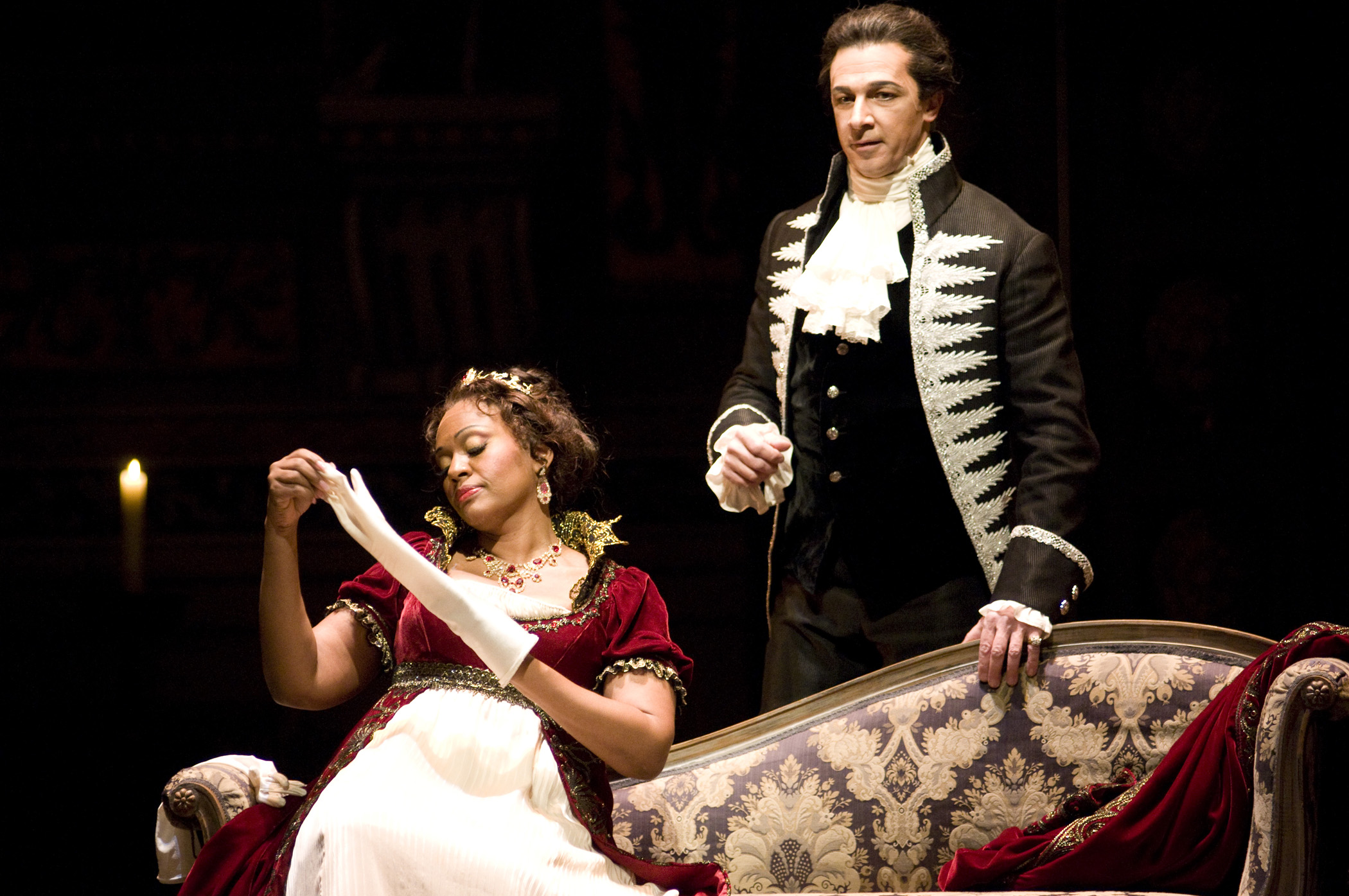
The lecherous Scarpia anticipates his conquest of Tosca. Wrong! Seattle Opera photo by Rosarii Lynch.
None of this stuff about "timeless" settings for Tosca: the story takes place in Rome over a specific, eventful weekend in June, 1800, as Napoleon's troops are invading Piedmont, on Italy's northern border.
The story, on the other hand, is a potboiler involving a beautiful opera singer, Tosca; a fugitive politician, Angelotti; a famous painter, Cavadarossi; and a villainous police chief, Scarpia. By the end of the opera, the genuine Napoleon has won, and all the fictional characters are dead. But, hey, that's entertainment!
As the cruel Scarpia, Greer Grimsley (who handled the same role in Seattle Opera's 2001 production) ain't no Hannibal Lecter; he's more like Heath Ledger's sauve and elegant Casanova. "Tosca, you make me forget God," he sings at the end of Act I. Then he orders the torture of Tosca's lover, Cavadarossi, because "violent conquest has more flavor." (Of course, as with any political story, there's the temptation to update it. Waterboarding, anyone?)
Soprano Lisa Daltirus sings the show-stopper aria Vissi d'arte ("I lived for art") as a lament to God: why are you doing this to me? (Hillary? I lived for politics?) Then she takes a knife from Scarpia's dining table and kills him. One down.
Oh, wait, Tosca has already given away Angelotti's hiding place; he kills himself to avoid capture. Two down.
Scarpia has supposedly given the order for a mock execution, but Cavadarossi is shot anyway. (That naughtly Scarpia! Duck-hunting Cheney?) Three down. When Tosca realizes what has happened, she leaps to her death from the castle parapet. Four down.
Our violent fantasies realized on a sumptuous stage, our nightmares played out to soaring music. That's grand opera for you: There Will Be Blood.
Seattle Opera presents Tosca, McCaw Hall, through March 9th. Tickets by phone (206-389-7676) or online.
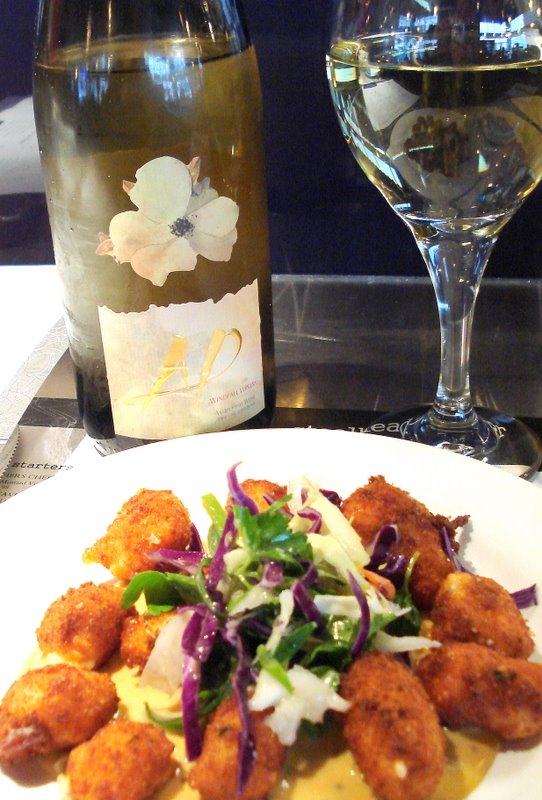
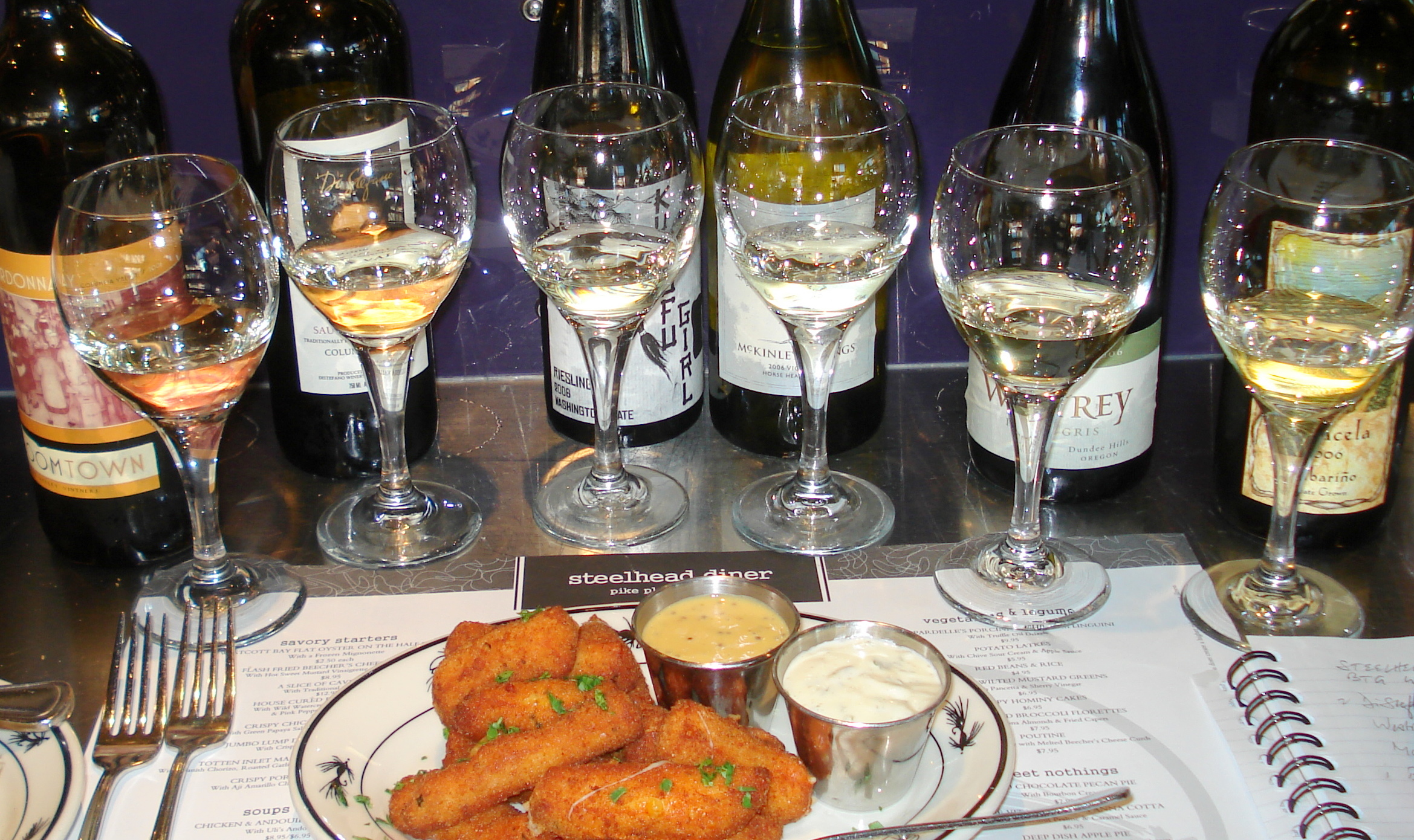
Last year's Asian Pear and cheese curds; this year's curds and lineup of six whites.
Twas a year ago this month: a terrific lunch at Kevin Davis's Steelhead Diner that started with flash-fried cheese curds from Market neighbor Beecher's and a glass of Asian Pear from Windfall Winery. A match made in heaven, but not a universal dish. The curds have to be dead fresh or they lose their appealing squeak; a nearby cheesemaker is essential. Beecher's sells its curds by weight ($11.50 a pound), chef Davis plates them up as an appetizer for $8.95.
Now, on deadline for a wine-and-cheese article, it's time to reconfirm those initial impressions. Down to Steelhead we go, only to find that wine steward Aaron Angelo has moved on. Sigh. That's the restaurant biz. But, gulp! The Asian Pear has dropped off the list! What to do?
Two-part solution. Thank goodness, the staff lets me arrange an impromptu tasting of six wines being poured by the glass, all the usual suspects (chardonnay, sauvignon blanc, pinot gris, viognier, riesling), as well as Abacela winery's remarkable albariño. The riesling, named Kung Fu Girl (from iconoclastic winemaker Charles Smith in Mattawa, Wash.), is the perfect foil for an appetizer plate of Westcott Bay flat oysters...especially when they're topped with a dab of champagne mignonette. The Boomtown chardonnay (a second label of Dusted Valley Vintners) is a textbook example of what local chardonnays should be: an unoaked welterweight of wines. It's clean, crisp, powerful without being too hefty. And the albariño is stunning with a Portuguese dish of clams, tomatoes and spicy pork.
Meantime, dining room manager Jessica Skye Bolt ducks out to buy a bottle of the Asian Pear at Pike & Western down the block. Ah! There's a reason for cheese and apples, cheese and pears. The crunchy, salty cheese curds, whether dipped in tartar or mustard sauce, cry out for a shot of tart, juicy fruit. Yes, I say, yes!
Stumble back to Belltown, resolve to complain less bitterly about wretched working conditions of freelance writers.
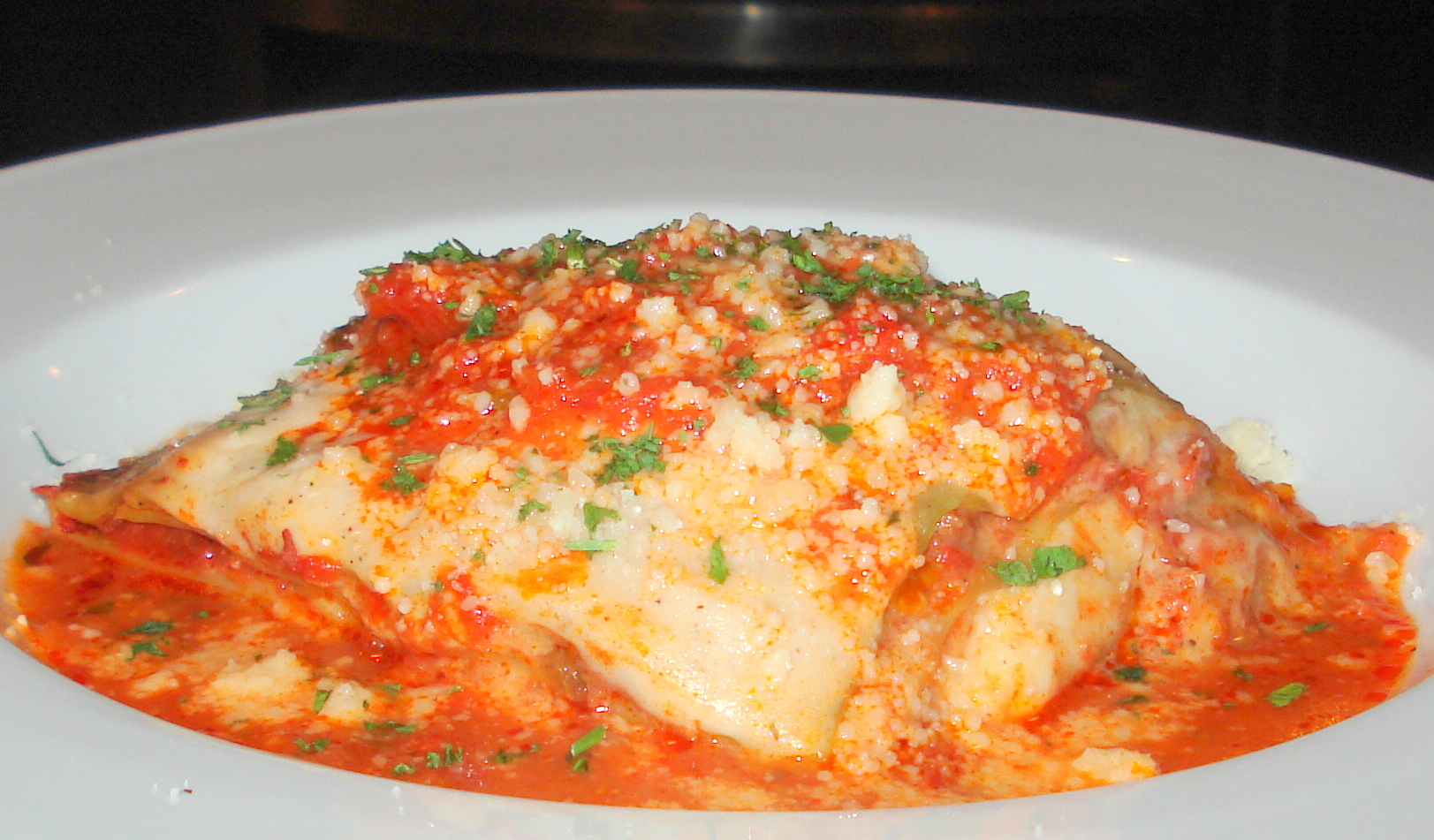
So this gent orders the lasagna at the Capitol Hill Via Tribunali last week and LOVES it. Oh, says the waitress, we buy that from Sorrentino.
Dude promptly finds out where Sorrentino is located (top of Queen Anne) and gets over there yesterday afternoon, is amazed to discover it's run by Mamma Enza, whom he met years ago when she was cooking at La Vita è Bella in Belltown. Big hugs all around. That amazing lasagna, could he get a double-order to go? Sure can.
As it happens, I'm behind the bar, so I pour the man a Prosecco and a glass of Montepulciano for his wife. We chat about the Sorrentino clan's restaurants (after Belltown, opening Mondello in Magnolia, Divino Wine Bar on Ballard Ave, then her own place), while Enza packs up their order. (Instructions for the lasagna? Fifteen minutes in a 350-degree oven.) He takes a copy of the menu (the lasagna's $15 at dinner) and gives me his card, which I swipe through the Dinerware computer: SCHULTZ/HOWARD.
Forty million customers walk into a Starbucks every week; that's a lot of coffee. The Starbucks ceo walking into Sorrentino, that we can handle. We don't have to shut down for retraining, either. But Howard, just don't expect free refills..
Many things Black Bottle is not: karaoke lounge, pool hall, etc. Many things Black Bottle does not pretend to offer: tablecloths, strolling musicians, etc. One thing it did have: candles. Not just candles, but exposed candles. No more.
The flame of an exposed candle, sez the fire marshall, Shall Not Be Allowed. Not at a Bar That Serves Alcoholic Beverages.
On the plus side, no more wax dripping on the bar. On the downside, dorky candle-condoms.
Last April, there was a post in these columns about a book called Touring the Wine Country of Washington, written by yours truly some 25 years ago. Everything you wanted to know about all 37 of the state's wineries, back in 1983. Now, with over 500 bonded premises in the state, with formal designations and informal marketing associations aplenty, with Paul Gregutt's informed and scholarly Washington Wines & Wineries as the indispensable reference, it's clearly time for a new touring book.
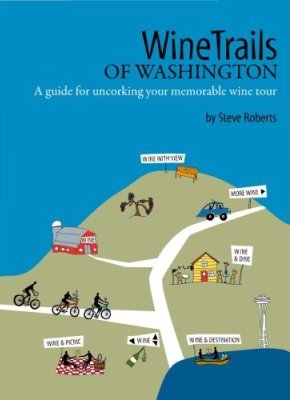
Enter Steve Roberts, owner of an insurance agency on Mercer Island specializing in employee benefit programs. He's gone out and collected information on 228 wineries and assembled a hefty book (almost 600 pages) organized by region into 32 "wine trails." In fact, that's the title: WineTrails of Washington. (Shades of the very first such book, Winery Trails of the Pacific Northwest, published by the late Tom Stockley in 1977.) What makes the Roberts book unique is its companion website, www.winetrailsnw.com, with a search functions, a page of description and a link for each winery. The format Roberts has chosen doesn't allow for much variation of emphasis; it's not always easy to tell if a winery is huge, famous, unknown or boutique-y, and there's not much help to find nearby restaurants or lodging. But he does use a star to indicate which wineries are best for viewing dramatic scenery or picknicking. Best of all, the website has links to the Google maps--nothing like zooming in on a satellite view of eastern Washington's crop circles! Don't know how he did it, but the book's only $19.95.
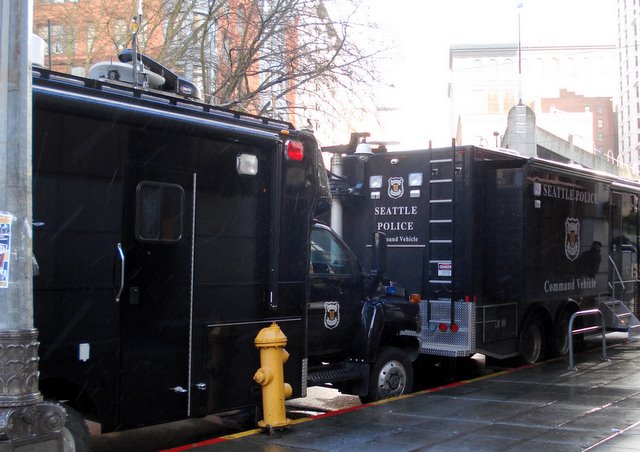
We remember what happened seven years ago, when poor Kristopher Kime got himself beaten to death on the street while cops stood by and did nothing. Not taking any chances tonight, those coppers. They've pulled their fearsome mobile command units up to the fire hydrants at First & Yesler, ready to do battle.
The American steakhouse--that dimly lit, mahogany-paneled, mafia-chic hideout for fat cats and their trophy molls--you'd think it would never fly in laid-back, egalitarian Seattle. You'd be wrong.
Yet another high-end steakhouse, from Atlanta's 25-unit Capital Grille chain, is opening an outpost downtown, just steps from chain rivals Ruth's Chris (New Orleans, 92 units) and Morton's (Chicago, 78 locations worldwide), not to mention locally-owned standbys like the Met the Brooklyn and Canlis.
We were invited to a press preview of Cap Grille but were unable to attend (it was our night to uncork chianti and pour primitivo at Sorrentino) but we did get to a dinner for the media at Morton's earlier in the week.
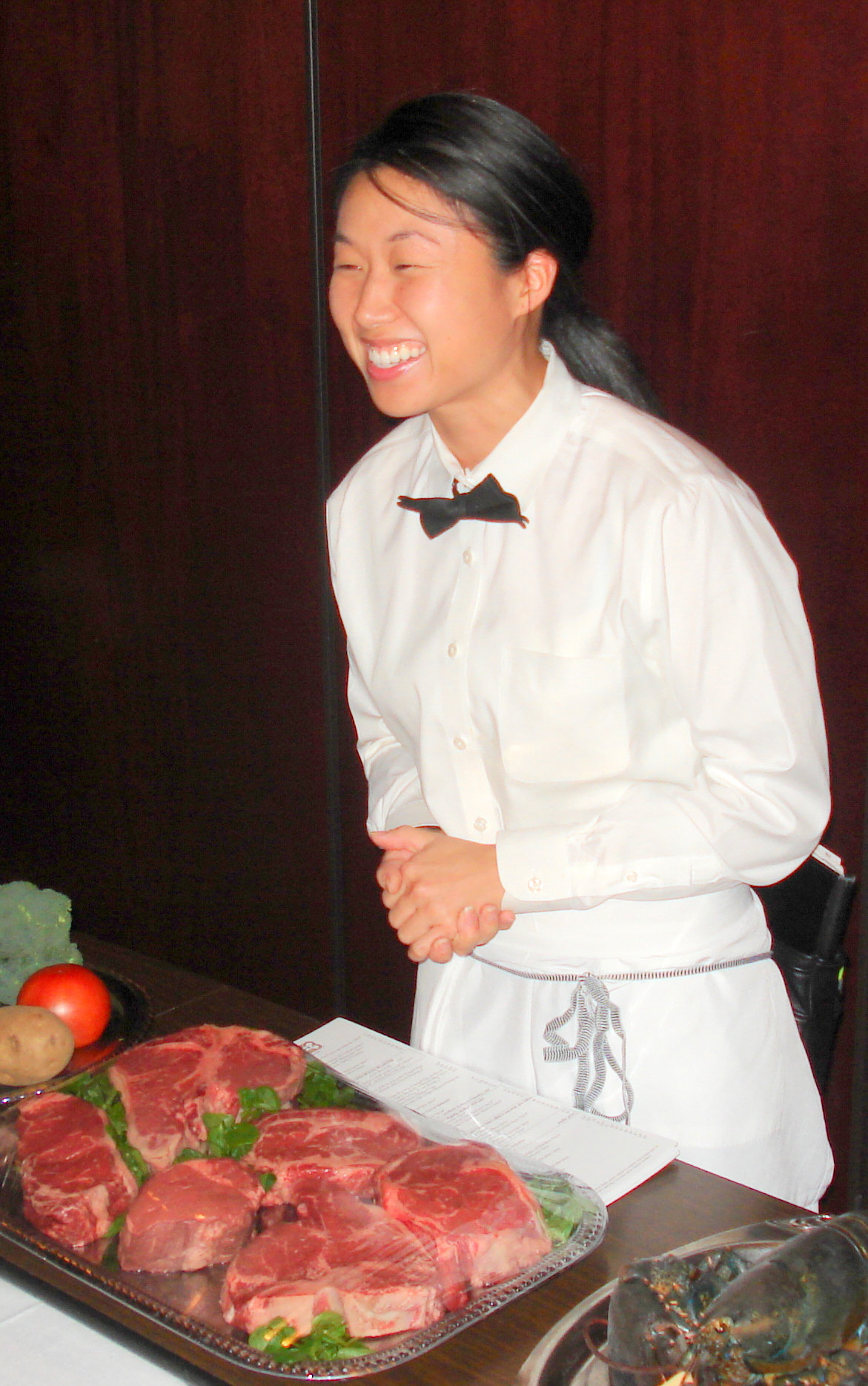
Below street level, speakeasy-like, we could hear the buzz of contented patrons whenever the doors to our private "board room" would open to admit servers bearing victuals and barmen with beverages. Heading the service team, Jane Lee brought forth six cuts of steak and one living specimen of Maine lobster: a primer on prime, one might say, full of good reasons to pay top dollar for dinner. Average tab at Morton's, by the way, is $95, compared to $60 at the Space Needle (our town's top-grossing restaurant, which serves over 300,000 meals a year), beating out local top ticket Daniel's Broiler ($83, one third of it wine and spirits.)
The steakhouse business, unlike the product, is tough, especially at the top end, where clubby local institutions, like El Gaucho and The Met in Seattle or the Ringside in Portland, used to dominate the market. Stiff drinks, big steaks and a discreet maitre d' were enough, back then, to draw politicos, celebrities and gawkers.
It wasn't until the late 1970s that franchised steakhouses caught on nationally, luring expense-account execs with pricey cuts of meet and stratospheric wine lists. (Fleming's, a Florida steakhouse chain with moderately priced wines, didn't survive in Seattle.)
The Wall Street Journal now has a feature with floor plans of "power tables" at restaurants frequented by business celebrities, a surprising number of them steakhouses. Airline magazines and business journals regularly run "where to eat" suggestions that highlight beef emporiums. The steakhouses themselves advertise "top ten" lists. And periodically, they even get reviewed by local writers, such as the review of El Gaucho in the current issue of the Stranger.
Local reviewers often choke on the high cost of eating in a steakhouse, though Leslie Kelly, a lowbrow restaurant writer whose bizarre reviews continue to appear in the Pee-Eye, totally dissed El Gaucho for both service and meat. She did write admiringly ("a great steak") about Sizzler (a Sherman Oaks, Calif., chain with 250 units).
But gee, if Microsoft is ready to spend billions on Yahoo, the steakhouses want some of that local dot-com wealth. So the institutions are changing. Like moles coming out of the ground, they're surveying a landscape of diet-conscious eaters picking at small plates out in the open. And today's high-spending diners, it seems, want to see and be seen. An exec at Morton's acknowledges that the steakhouse-as-mafia-hideout is passé. The waiters may still wear tuxes even as (and even if) the clientele dresses in jeans, but the newest Morton's are all above-ground, with windows.
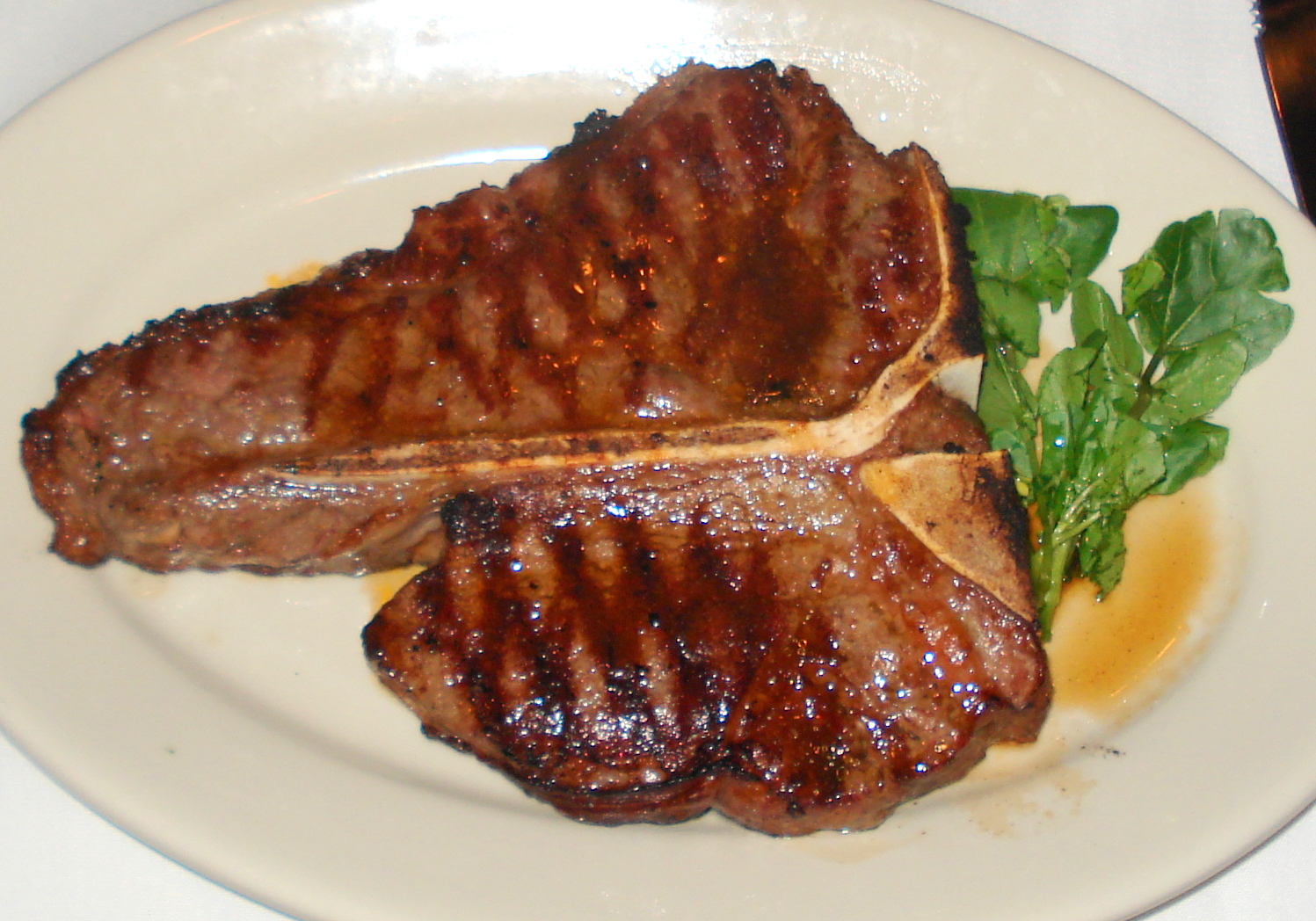
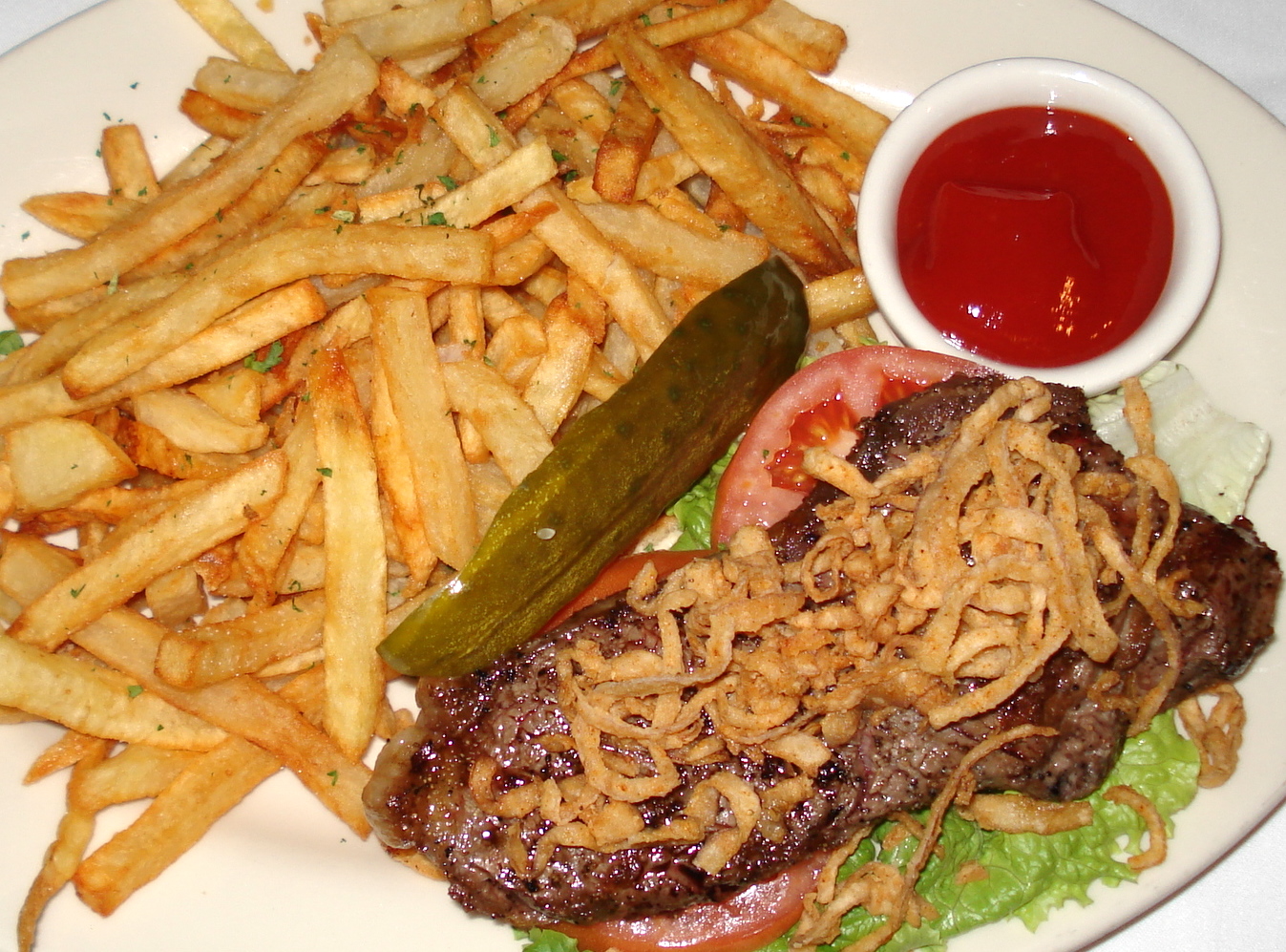
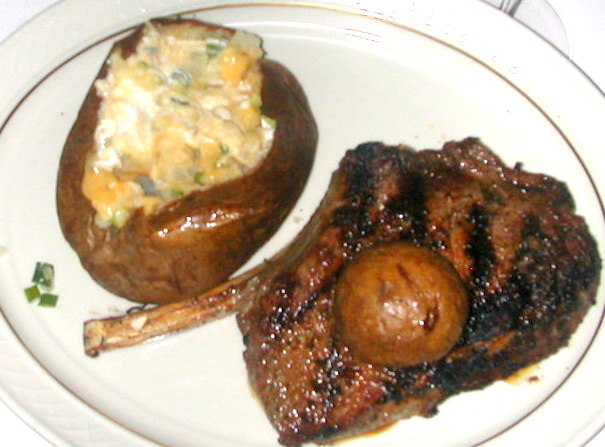
Top, porterhouse at Morton's, Jane Lee. Above, steak sandwich at Ruth's Chris, rib steak at El Gaucho